Learn What Language Did The Ancient Egyptians Speak and reveal the fascinating system behind Egypt’s iconic hieroglyphs. Many visitors walking through temples and museums don’t realize they’re looking at a real language once used in daily life and rituals. This guide takes you through its origins, evolution, and where you can experience its legacy across Egypt’s most famous historical sites.
What language did the ancient Egyptians speak?
The answer to What Language Did The Ancient Egyptians Speak is both simple and fascinating. They spoke Ancient Egyptian, a language that evolved over thousands of years and was used in daily life, religious rituals, and official records. It may sound like a single language, but in reality, it changed over time into different stages, reflecting shifts in culture and society.
Many travelers are surprised to learn that this language was not only spoken but also written in several forms, including hieroglyphs carved on temple walls and tombs. When you walk through places like Luxor or Saqqara, you are actually looking at real communication from the past, not just decorative symbols.
Historians believe Ancient Egyptian was widely understood across the Nile Valley, especially during powerful periods like the Old and Middle Kingdoms. Over time, it developed into later forms, eventually leading to Coptic language, which still survives today in religious use.
If you visit Egypt, guides often explain how these inscriptions tell stories of gods, kings, and everyday life, making the ancient language feel surprisingly alive even now—especially during visits to sites like the Mortuary Temple of Hatshepsut on a Queen Hatshepsut Temple Tour.
Ancient Egyptian Language: The Roots of a Civilization
Long before modern alphabets, the story of Egypt began with a powerful system of communication that shaped an entire civilization. To understand what language the ancient Egyptians spoke in Egypt, you need to look at how deeply language was connected to religion, power, and daily life.
Ancient Egyptian was more than just a way to speak—it was a tool used to record history, honor gods, and guide souls into the afterlife. Priests, scribes, and officials carefully preserved words on temple walls, papyrus scrolls, and tomb carvings. Many visitors are surprised to learn that these writings were not random symbols, but a structured and meaningful language with grammar and rules.
When you stand inside massive temple complexes like Karnak, the walls are covered in texts that describe victories, rituals, and offerings. This is where the language truly comes alive. Exploring these carvings during the Karnak Temple Tour helps you see how communication shaped belief systems and royal authority.
Historians believe this language developed along the Nile as communities grew more complex. Over time, it became one of the longest-lasting languages in human history, forming the foundation of Egypt’s identity and leaving a legacy that still fascinates travelers today.
Explore the Classification of Ancient Egyptian Language
To fully understand What Language Did The Ancient Egyptians Speak, it helps to see how this language was not fixed, but evolved through clear stages over thousands of years. Scholars usually divide Ancient Egyptian into several phases, each reflecting changes in society, culture, and communication.
It began with early forms used in royal inscriptions, then developed into Old Egyptian during the pyramid age. Later, Middle Egyptian became the classical form, widely used in literature and religious texts. After that, Late Egyptian appeared as a more spoken version of the language, followed by Demotic, which was faster and more practical for daily writing.
One interesting thing is that even when newer forms developed, older versions were still used in temples and sacred texts. This means Egypt had multiple layers of language at the same time, depending on the purpose.
When visiting historical sites, you can actually spot these differences. For example, carvings in royal tombs feel more formal, while later inscriptions look simpler and more fluid. Exploring areas like the Valley of the Queens Tour allows you to see how these writing styles changed across centuries.
Because of this long evolution, Ancient Egyptian is considered one of the most complex and longest-lasting language systems in human history.
Archaic Egyptian (Before 2600 BC)
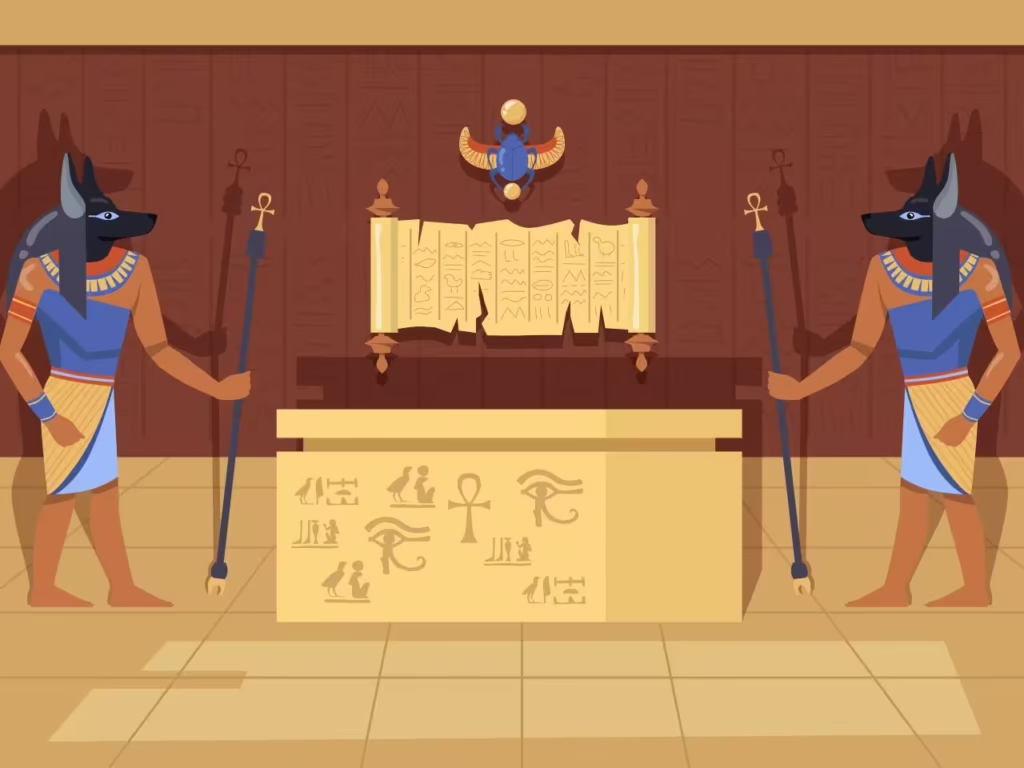
The earliest stage of Egypt’s language takes us back to a time when writing itself was just beginning to form. Known as Archaic Egyptian, this phase appeared before 2600 BC and is closely linked to the rise of the first dynasties. It may look simple compared to later texts, but this is where the foundation of Ancient Egyptian language hieroglyphics was first established.
At this stage, writing was mainly used for royal and ceremonial purposes. You can still see these early inscriptions on objects like ivory tags, stone vessels, and tomb walls. The symbols were more direct and less detailed, often representing names, titles, and offerings rather than full sentences.
Historians believe that during this time, communication was becoming more organized as Egypt unified under early kings. Because of this, the need to record information—especially related to power and religion—led to the birth of a structured writing system.
If you explore early sites or museum collections, you’ll notice how these first symbols feel raw yet meaningful. They may not be as artistic as later carvings, but they mark the starting point of one of the most influential writing systems in human history.
Old Egyptian (2600 – 2000 BC)
During the age of the pyramids, the language of Egypt entered a more structured and powerful phase known as Old Egyptian. This is the period when writing became clearer, more detailed, and widely used in monumental inscriptions. If you’re exploring What Language Did The Ancient Egyptians Speak, this stage is where the language truly begins to look familiar in its classic form.
Old Egyptian was the language of kings, officials, and religious texts. It appears extensively in pyramid walls, where spells and prayers were written to guide pharaohs into the afterlife. These texts, often called Pyramid Texts, are among the oldest religious writings in the world.
Standing near the pyramids or walking through early tomb sites, you can still see these inscriptions carved deeply into stone. The symbols became more refined, and sentences were more complete compared to earlier stages. It may look decorative at first glance, but every sign had meaning and purpose.
Historians believe this period reflects a time when centralized power was strong, and communication needed to be precise. Because of this, Old Egyptian played a key role in shaping how the language developed in later centuries, leaving behind a legacy that still defines ancient Egypt today.
Middle Egyptian (2000-1300 BC)
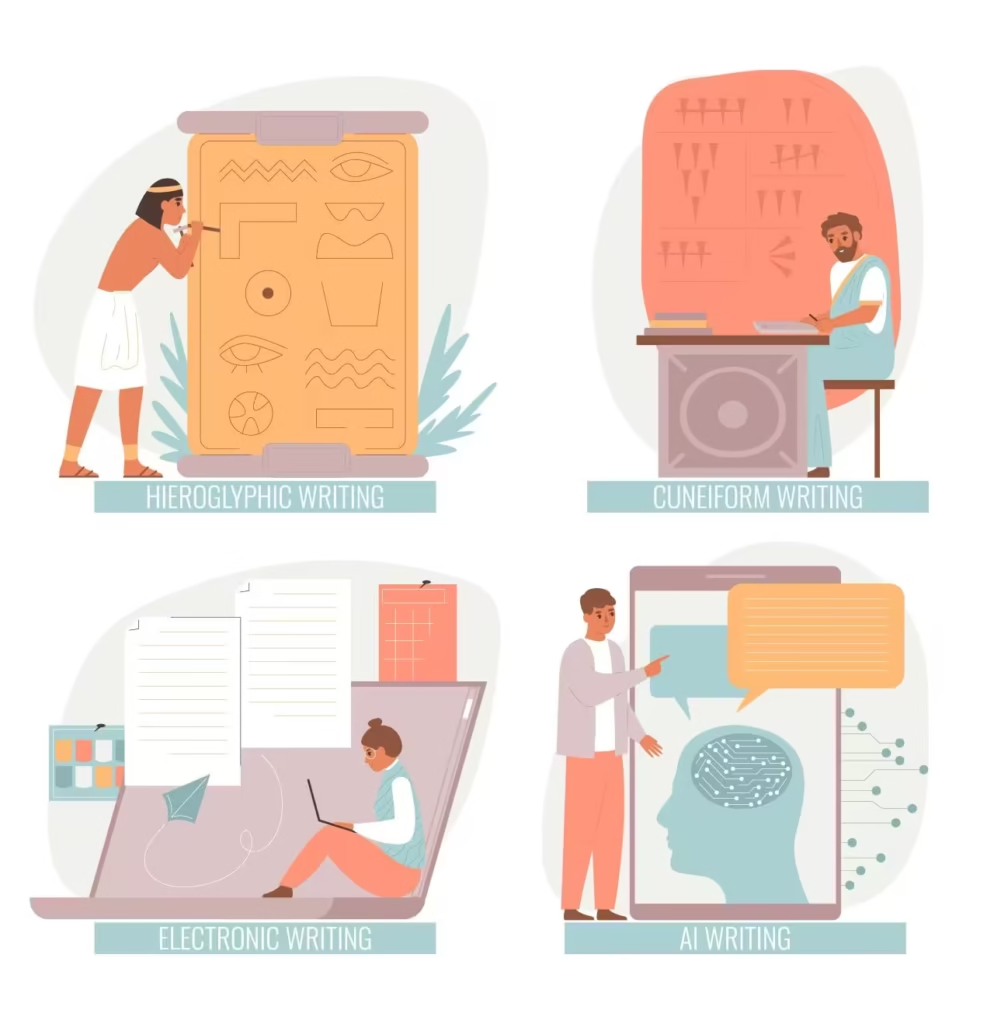
By the time Egypt reached its golden age, the language had developed into what many scholars consider its most refined form—Middle Egyptian. This stage became the classical standard, used in literature, religious texts, and monumental inscriptions for centuries. Interestingly, even long after it was no longer spoken daily, it continued to be used in temples and formal writing.
One key detail many travelers don’t realize is how closely this stage connects to the later Coptic language, which preserved elements of pronunciation and structure. Because of this link, Middle Egyptian plays a major role in helping historians understand how the ancient language actually sounded.
Walking through temples in Luxor, especially inside vast complexes like Karnak, you can see beautifully carved inscriptions from this period. The symbols are more balanced and elegant, reflecting a time when art, language, and belief were deeply connected. Priests used this form to record rituals, hymns, and stories about the gods.
Experts believe this version of the language was so respected that it became a kind of “sacred standard.” Even as everyday speech changed, Middle Egyptian remained the language of tradition, preserving Egypt’s identity across generations.
Late Egyptian (1300-700 BC)
As Egypt moved into a more dynamic and complex era, the language shifted into a form known as Late Egyptian. This stage reflects a clear transition from formal, classical writing to something closer to everyday speech. If you’re exploring What Language Did The Ancient Egyptians Speak, this is the point where the language begins to feel more practical and personal.
Late Egyptian was widely used in letters, stories, and administrative documents. Unlike earlier stages, which were mostly reserved for religious or royal use, this version captured real conversations and daily life. It’s through these texts that historians get a closer look at how ordinary people communicated.
One interesting thing is how the writing style also became more flexible. While hieroglyphs were still used for monuments, faster scripts like hieratic became more common for writing on papyrus. This made communication easier and more efficient.
If you visit temple walls or explore collections in Upper Egypt, you may notice inscriptions that feel less rigid and more expressive. This change reflects a society that was evolving, with language adapting to new needs.
Because of this shift, Late Egyptian plays a key role in connecting the formal past with the more accessible language that followed.
Demotic (600 BC – 400 AD)
By the later periods of Egyptian history, the language transformed into a faster, more practical script known as Demotic. This stage reflects a major shift in Ancient Egypt language and writing, where communication became simpler and more suited to everyday use rather than monumental carvings.
Demotic was widely used for business, legal documents, letters, and administrative records. Unlike the detailed and artistic hieroglyphs seen on temple walls, this script looked more like quick handwriting. It allowed scribes to write efficiently on papyrus, making it ideal for daily life across cities and villages along the Nile.
Many visitors are surprised to learn that while temples still displayed traditional hieroglyphs, ordinary people relied on Demotic for real communication. This created a clear contrast between sacred and practical writing systems at the same time.
If you explore museum collections, especially in Luxor, you can see papyrus documents written in this script. During the Luxor Museum Tour, guides often explain how Demotic texts reveal contracts, taxes, and personal messages—giving a rare glimpse into everyday life.
Because of its simplicity and speed, Demotic became one of the final stages before the language evolved further, marking an important transition toward later forms like Coptic.
Ancient Egyptian Hieroglyphs: The Language of the Pharaohs
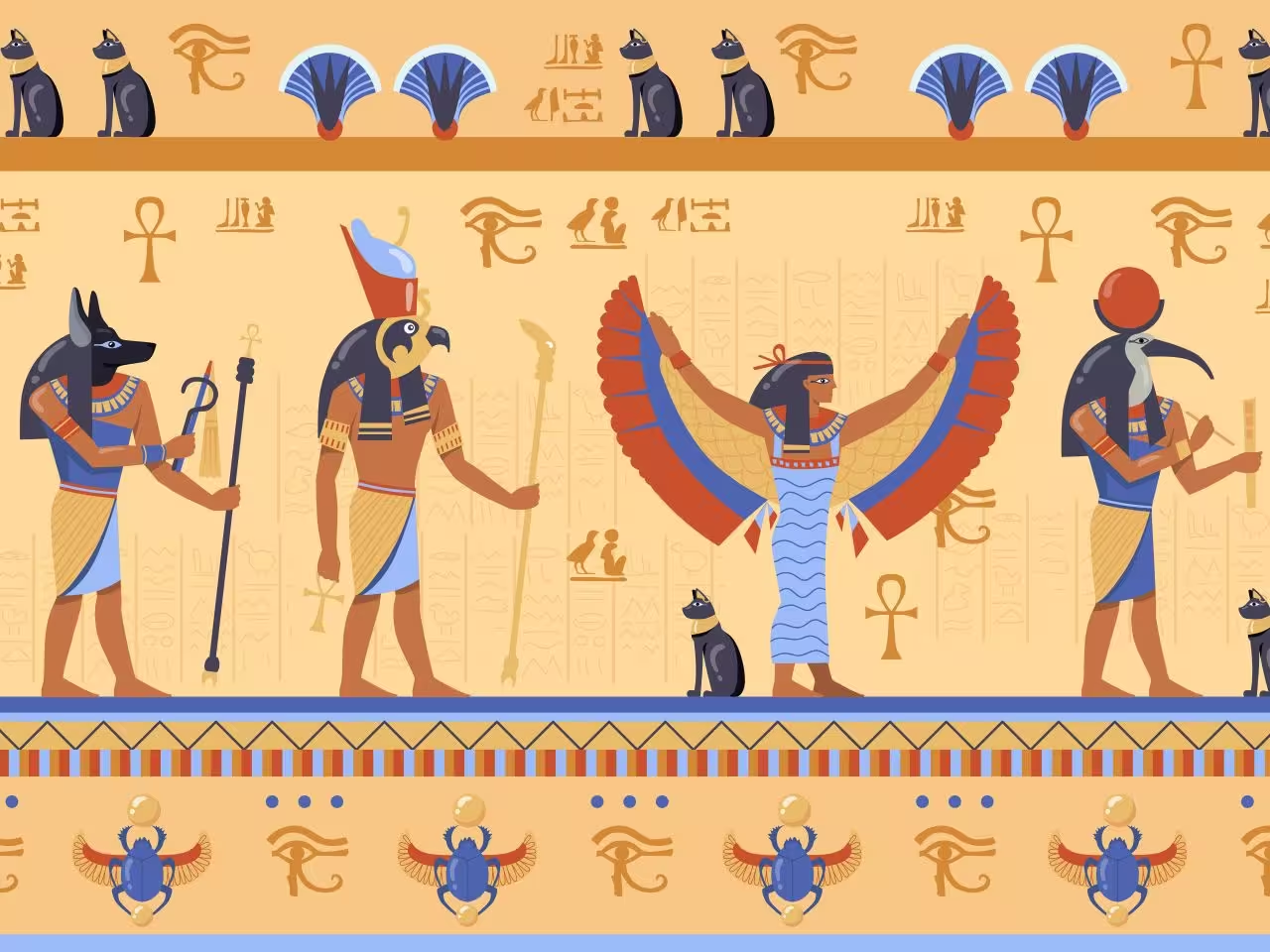
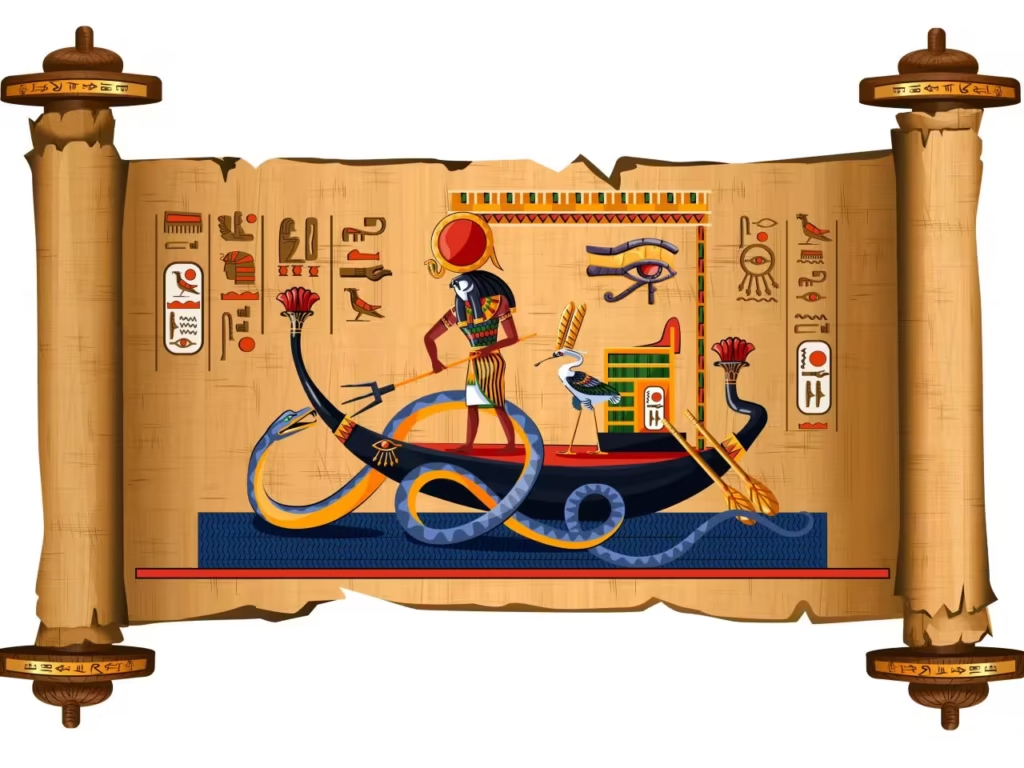
When people ask What Language Did The Ancient Egyptians Speak, they often picture hieroglyphs first—and for good reason. These iconic symbols were the most recognizable form of writing used in ancient Egypt, especially for temples, tombs, and royal monuments.
Hieroglyphs were not just pictures; they formed a complete writing system combining sounds, words, and ideas. Some symbols represented full words, while others worked like letters or sounds. Because of this, reading them required deep knowledge and training, usually reserved for skilled scribes and priests.
Walking through massive temple walls in Luxor, you’ll notice how detailed and carefully arranged these carvings are. Inside sacred spaces, every symbol had meaning, often telling stories of gods, kings, and journeys to the afterlife. During visits like the Karnak Temple Tour, guides often point out how these inscriptions record victories, offerings, and religious rituals.
One interesting thing is that hieroglyphs were mainly used for important and sacred purposes. For everyday writing, simpler scripts were preferred. Still, hieroglyphs remained the symbolic heart of Egyptian identity, preserving messages that have survived for thousands of years—something you can also experience during a visit to the Colossi of Memnon on a Colossi of Memnon Tour.
Coptic Language
The final stage of the ancient Egyptian linguistic journey is known as Coptic, a direct descendant of earlier forms of the language. If you’re wondering what language was spoken during ancient Egypt?, the answer evolves over time, and Coptic represents its last living phase before disappearing from daily use.
Coptic is different from earlier stages because it uses an alphabet based largely on Greek letters, with a few additional signs to represent unique Egyptian sounds. This change made writing more accessible and easier to record compared to complex hieroglyphs or Demotic script.
What makes Coptic especially fascinating is that it didn’t completely vanish. Even today, it survives in religious contexts within Egyptian churches, where prayers and liturgies are still spoken in this ancient language. Because of this, it provides scholars with valuable clues about how Ancient Egyptian may have sounded.
Visitors exploring Egypt often encounter Coptic texts in museums or historic religious sites. During experiences like the Luxor Museum Tour, you can see how this language connects the ancient world to later cultural traditions.
In many ways, Coptic acts as a bridge between ancient and more modern Egypt, preserving the voice of a civilization that lasted for thousands of years.
Ancient Egyptian Vs Modern Egyptian Language
The difference between ancient and modern communication in Egypt is striking, yet deeply connected. When asking What Language Did The Ancient Egyptians Speak, you’re looking at a system that is completely different from the Arabic spoken in Egypt today, both in sound and structure.
Ancient Egyptian was built on symbols, evolving scripts, and a complex grammar that changed over thousands of years. It included hieroglyphs for monuments, hieratic for religious texts, and Demotic for daily use. In contrast, modern Egyptian Arabic is part of a living language family, spoken naturally in homes, markets, and cities across the country.
Many travelers notice this contrast when visiting temples. The carvings on walls may look mysterious, while just outside, guides speak modern Arabic or English. It creates a unique experience where two completely different linguistic worlds exist side by side.
Interestingly, there is still a connection. Some sounds and expressions may have distant roots in older forms, especially through Coptic. During visits like the Luxor Mummification Museum, you can explore how ancient traditions, including language, influenced later cultural practices.
This contrast highlights how Egypt has evolved while still preserving its deep historical identity through language.
What Language Did The Ancient Egyptians Speak in Daily Life
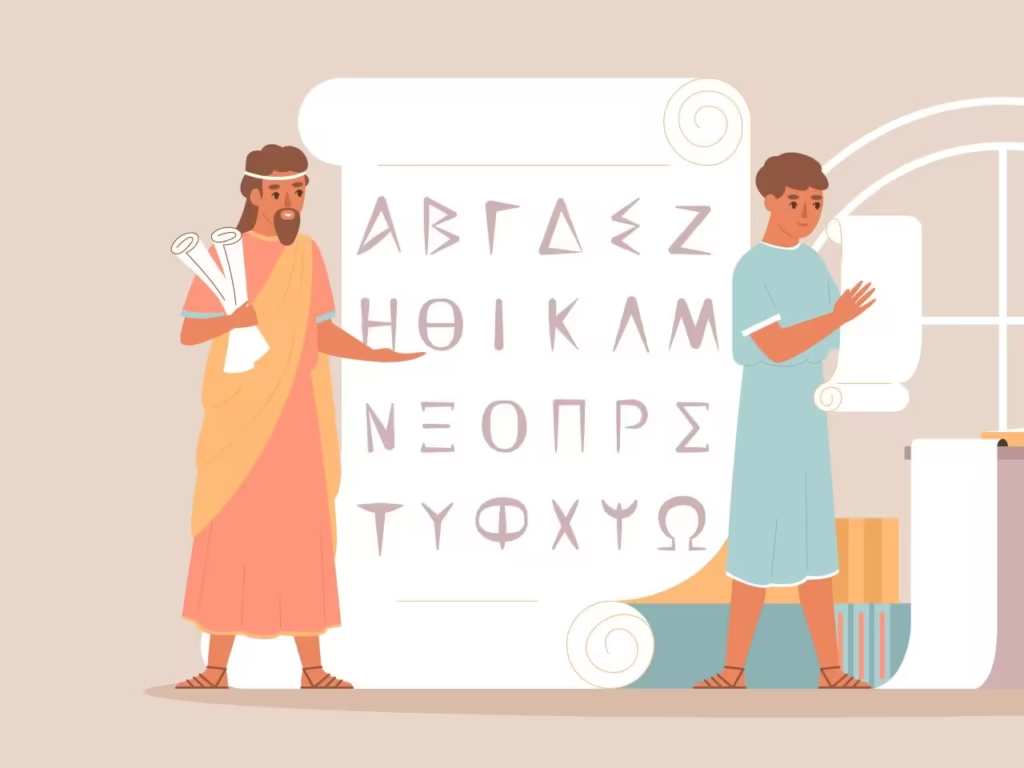
In everyday situations, the answer to What Language Did The Ancient Egyptians Speak was not always the formal version seen on temple walls. Instead, people used more practical forms of speech that reflected real conversations, trade, and daily interactions. This is where we begin to understand Ancient egyptians language words as part of normal life rather than sacred inscriptions.
Farmers, workers, and merchants spoke versions of the language that evolved over time, especially during the Late Egyptian and Demotic periods. These forms were simpler and more flexible, making communication easier in markets, homes, and along the Nile.
Many of these everyday expressions were written in letters, contracts, and personal documents. Some of these texts have survived on papyrus, giving historians a rare glimpse into daily life. They include everything from family messages to business deals, showing how people truly spoke.
If you visit historical museums, especially in Luxor, you can see these documents up close. During the Luxor Mummification Museum, guides often explain how even medical and ritual practices were recorded using practical language, not just formal scripts.
This side of the language feels more human and relatable, revealing how ancient Egyptians actually lived, spoke, and connected with each other.
How Did the Ancient Egyptian Language End?
The story of What Language Did The Ancient Egyptians Speak does not end suddenly, but fades gradually over centuries. As Egypt came under foreign rule—first by the Greeks, then the Romans—the language began to change both in speech and writing.
Greek became widely used for administration and official matters, especially after Alexander the Great’s conquest. Later, with the spread of Christianity, Coptic replaced earlier forms of Egyptian in many daily and religious contexts. While this was still connected to the ancient language, it marked a major shift away from hieroglyphs and older scripts.
One important moment came when temples were closed during the Roman period. Without priests to maintain traditional writing systems, hieroglyphs slowly disappeared. The last known hieroglyphic inscription dates to around the 4th century AD.
Many visitors standing in front of temple walls wonder why this language vanished despite its long history. The answer lies in these cultural and political changes that reshaped Egypt over time.
Even though the spoken language evolved and eventually disappeared, its written form remained preserved on monuments. Today, during visits to places like Karnak or Luxor, those ancient inscriptions still tell stories—silent, but not forgotten.
Can Anyone Still Speak Ancient Egyptian?
Today, the answer to What Language Did The Ancient Egyptians Speak comes with an important detail—no one speaks it in the same way ancient Egyptians once did. The original spoken language disappeared centuries ago as it gradually evolved into later forms and was eventually replaced by other languages.
However, that does not mean it is completely lost. Scholars and Egyptologists can read and understand Ancient Egyptian by studying inscriptions, papyrus texts, and temple carvings. Thanks to discoveries like the Rosetta Stone, experts have been able to decode the writing system and reconstruct much of the language.
Interestingly, some sounds of the ancient language are still preserved through Coptic, which is used in religious settings today. This gives researchers valuable clues about pronunciation, even if we cannot hear the language exactly as it was spoken thousands of years ago.
When you visit Egypt, guides often bring this history to life by explaining symbols and translating carvings in real time. Standing inside a tomb or temple, it may feel like the language is still speaking—just in a different way.
So while no one speaks it fluently today, Ancient Egyptian continues to live on through study, history, and the incredible monuments that still carry its voice.
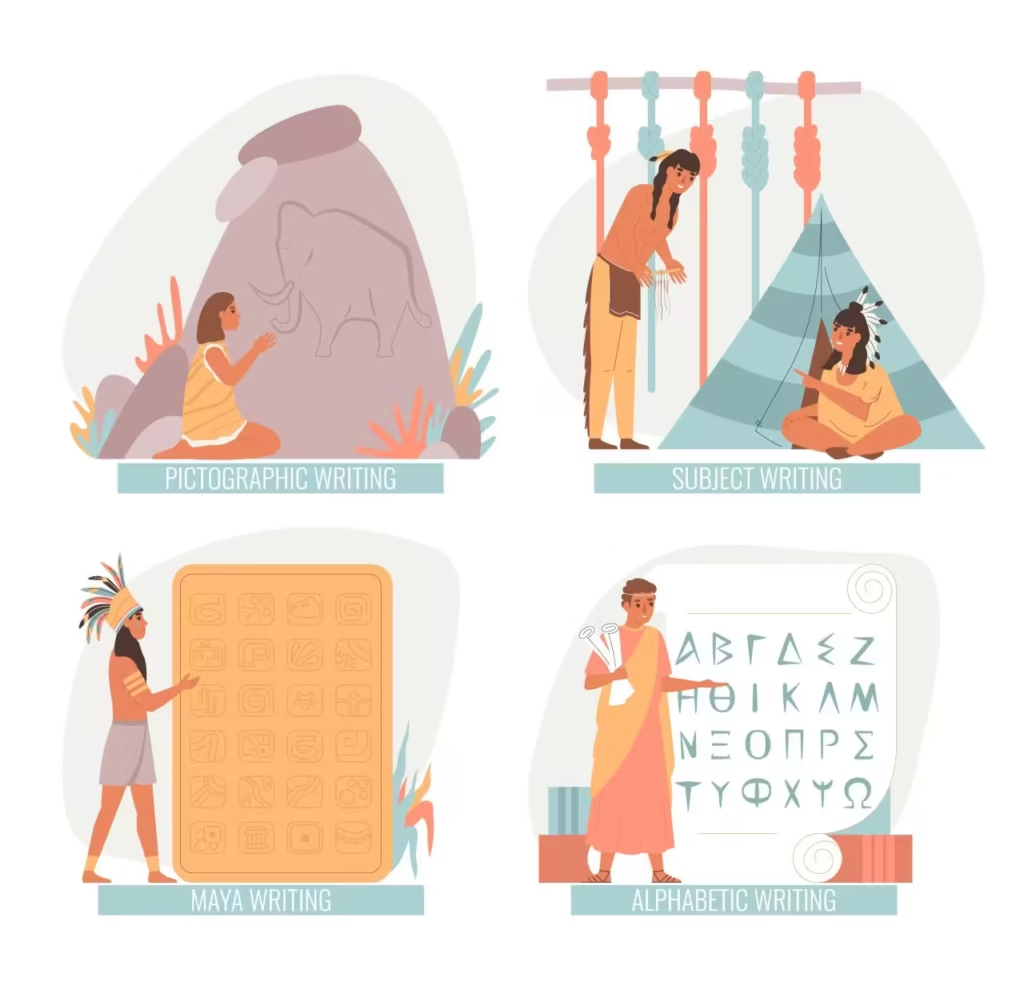
What Language is Closest to Ancient Egyptian?
If you’re wondering what language did the ancient egyptians speak in egypt and what comes closest to it today, the answer is Coptic. This language is the final stage of Ancient Egyptian and preserves many of its sounds, structure, and vocabulary more than any other form.
Coptic may look different because it uses a Greek-based alphabet, but underneath, it carries the essence of the ancient language. Historians and linguists rely on it to understand pronunciation, since earlier scripts like hieroglyphs did not clearly show vowels. Because of this, Coptic acts as a key bridge between ancient and later Egyptian communication.
Many travelers are surprised to learn that Coptic is still used today, especially in religious settings. Hearing it spoken in churches offers a rare connection to the distant past, almost like listening to echoes of ancient voices.
While modern Egyptian Arabic is the language spoken across the country now, it is not directly similar in structure. Coptic remains the closest link, helping experts reconstruct how Ancient Egyptian once sounded.
This connection makes Egypt unique—where even today, parts of an ancient language still quietly survive.