Learn What Are The 3 Main Languages In Egypt and uncover the voices that bring this country to life. From local markets in Cairo to historic sites in Luxor, language plays a key role in every interaction. Travelers often notice the mix of tradition and modern communication. In this guide, you’ll understand how these languages are used and what to expect when exploring Egypt’s culture and daily conversations.
What are the 3 main languages in Egypt?
The answer to What Are The 3 Main Languages In Egypt is simple: Modern Standard Arabic, Egyptian Arabic, and Coptic. These three languages reflect both the modern identity and the deep historical roots of the country. While Arabic dominates daily life, the presence of Coptic connects Egypt to its ancient past in a unique way.
If you’re wondering How many languages are spoken in Egypt, the number is actually higher, but these three are the most important to understand as a traveler. Modern Standard Arabic is used in official settings like news, education, and government. Egyptian Arabic, on the other hand, is what you will hear everywhere—from taxi drivers in Cairo to shop owners in local markets.
Coptic is less common in daily conversation, yet it still plays a vital role in religious settings, especially within churches. When you visit historic areas like Luxor or explore old neighborhoods, guides often mention how this ancient language evolved over time.
Many visitors are surprised by how smoothly locals switch between these languages, especially in tourist areas, making communication easier than expected.
Top Languages Spoken In Egypt
Egypt’s language scene is more diverse than many travelers expect, blending everyday communication with deep historical roots. At the top, Egyptian Arabic is what you will hear most often in streets, cafés, and markets. It’s lively, expressive, and slightly different from formal Arabic taught in schools. Alongside it, Modern Standard Arabic appears in official signs, media, and education, creating a balance between spoken and written communication.
Coptic, although no longer used in daily conversation, still holds an important place in religious life. In churches, you may hear chants in this ancient language, connecting modern Egypt to traditions that go back thousands of years. English is also widely used, especially in tourist areas, hotels, and guided tours, making it easier for visitors to move around confidently.
Many travelers notice this mix while exploring coastal cities. For example, during a Camel Riding Hurghada experience, guides often switch naturally between Arabic and English to communicate with international visitors. This flexibility is part of what makes traveling in Egypt feel accessible, even if you don’t speak the local language.
What Are The 3 Main Languages In Egypt and Why They Matter for Travelers
Understanding What Are The 3 Main Languages In Egypt can completely change how you experience the country. It’s not just about communication—it shapes how you connect with locals, navigate cities, and understand cultural details. The three main languages—Modern Standard Arabic, Egyptian Arabic, and Coptic—each serve a different purpose, and together they create a rich linguistic landscape.
Many travelers ask, Is Egyptian a language, and the answer is interesting. Egyptian Arabic is not a separate official language, but it is the everyday spoken dialect used by millions. This is what you’ll hear in taxis, markets, and casual conversations, especially in busy places like Cairo.
Modern Standard Arabic appears in formal situations such as signs, announcements, and news, while Coptic reflects Egypt’s ancient heritage and is still used in religious contexts. When you visit temples or historic churches, guides often explain how these languages connect past and present.
Because of this mix, travelers find it easier than expected to adapt. Even without speaking Arabic, recognizing the role of each language helps you feel more confident and engaged throughout your journey in Egypt.
Modern Standard Arabic: The Official Language
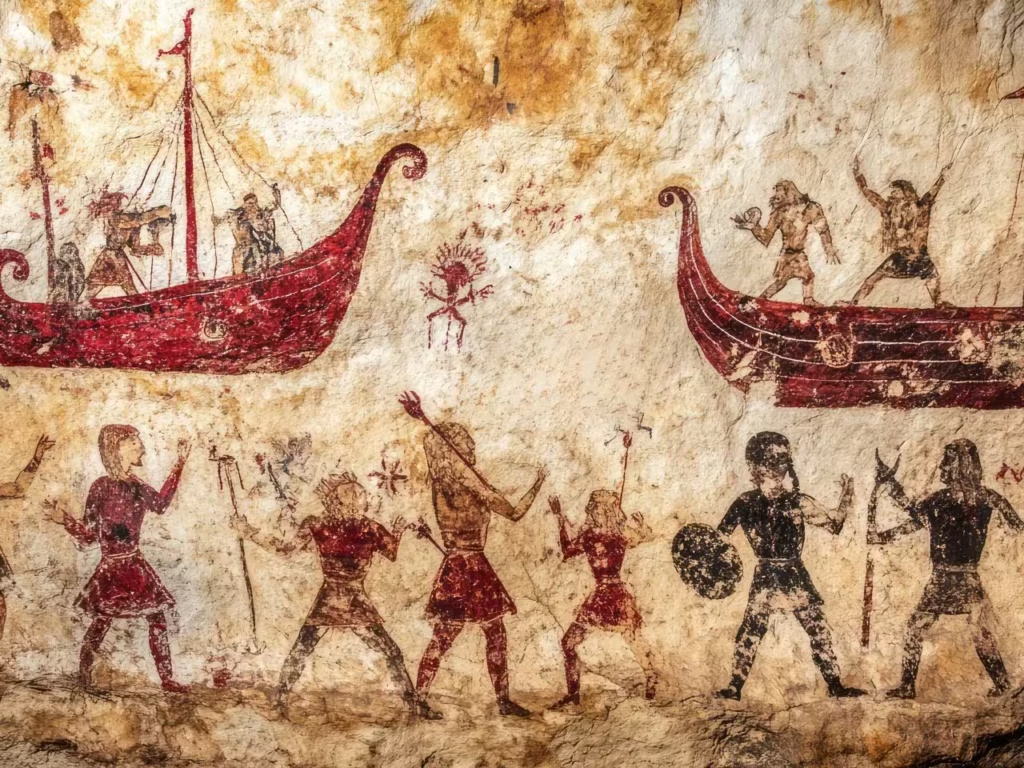
Modern Standard Arabic is the formal language used across Egypt in government, education, media, and official communication. While you may not hear it often in casual conversations, you will see it everywhere—on street signs, newspapers, and museum descriptions. It acts as a unifying language that connects Egypt with other Arabic-speaking countries, making it essential for formal contexts.
For travelers, this becomes clear the moment you arrive. At airports, hotels, and historical sites, written information is usually presented in Modern Standard Arabic alongside English. It may look complex at first, but many visitors quickly get used to recognizing common words and symbols.
Interestingly, while locals rarely speak it in daily life, they understand it perfectly. Instead, they switch to Egyptian Arabic when talking casually. This contrast is part of what makes the language experience in Egypt so unique.
If you’re exploring adventure activities, such as a Hurghada Quad Bike trip, guides may explain safety instructions in both English and simplified Arabic forms, blending formal and spoken language naturally. This flexibility helps visitors feel more comfortable while still experiencing authentic communication.
Egyptian Arabic (Masri): The Vernacular of Daily Life
Walk through any street in Cairo or sit in a local café, and you’ll immediately hear Egyptian Arabic, often called Masri. This is the true language of everyday life—the one people use to joke, negotiate prices, and share stories. When talking about What Are The 3 Main Languages In Egypt, this is the version of Arabic that matters most for real interactions.
In fact, if you’re wondering What is the most spoken language in Egypt, the answer is clearly Egyptian Arabic. It’s widely understood across the country and even beyond, thanks to Egyptian movies and TV shows that made this dialect familiar throughout the Arab world.
What makes Masri special is how simple and expressive it feels compared to formal Arabic. Travelers often pick up a few words quickly, especially greetings and numbers, because locals use them constantly in markets and shops. Many visitors are surprised by how friendly conversations become once they try even a few phrases.
If you visit places like Luxor or Aswan, you’ll notice slight variations in accent, but the core language remains the same. This everyday dialect is what truly brings Egypt’s culture to life.
Coptic Language
Coptic is one of the most fascinating parts of Egypt’s linguistic identity, even though you won’t hear it in everyday conversations. It is the final stage of the ancient Egyptian language, preserved mainly within religious traditions. Today, it is used in churches, especially during prayers and ceremonies, keeping a direct connection to Egypt’s distant past alive.
When you step inside historic churches in Cairo or Upper Egypt, you may hear soft chants in Coptic echoing through the space. It may sound unfamiliar, yet it carries thousands of years of history. Many visitors are surprised to learn that this language evolved from the same roots as the inscriptions seen on temple walls in Luxor and ancient tombs.
Although it is no longer spoken casually, Coptic still plays a symbolic role in Egyptian culture. It represents continuity—linking modern communities to ancient civilizations. During experiences like Horse Riding Hurghada, guides sometimes share stories about Egypt’s past, including how languages like Coptic survived through religion rather than daily speech.
This quiet presence makes Coptic more than just a language; it is a living piece of Egypt’s heritage.
Saidi Arabic in Egypt
Traveling south of Cairo into Upper Egypt, you’ll start to notice a different rhythm in speech. Saidi Arabic is the regional dialect spoken in areas like Luxor, Aswan, and along the Nile Valley. While it is still a form of Arabic, it sounds distinct from the version heard in Cairo, with unique pronunciation and expressions shaped by local culture.
When exploring What Are The 3 Main Languages In Egypt, it’s interesting to see how these variations fit into the bigger picture. Egyptian Arabic remains the most widely understood, but Saidi Arabic adds a regional identity, especially in the south. Many travelers first notice this difference when speaking with locals in villages or traditional markets.
This dialect also reflects Egypt language in the past, as Upper Egypt has preserved older linguistic influences more strongly than urban areas. Historians believe that isolation and strong local traditions helped maintain these unique speech patterns over time.
Walking through temples in Luxor or taking a boat ride in Aswan, you may hear locals speaking Saidi Arabic among themselves, then switching to a more common dialect when talking to visitors. This ability to adapt highlights the richness of language across Egypt’s regions.
The Nubian language in Egypt
In the far south of Egypt, especially around Aswan and near Lake Nasser, Nubian languages are still spoken by local communities. These languages are completely different from Arabic, with their own structure, sounds, and deep cultural meaning. Many travelers don’t expect this level of diversity until they visit Nubian villages and experience it firsthand.
Walking through a colorful Nubian village, you might hear conversations that sound entirely unfamiliar compared to Egyptian Arabic. This is because Nubian languages belong to a different linguistic family, preserved through generations despite historical changes and displacement.
What makes Nubian culture special is how closely language is tied to identity. Songs, stories, and traditions are often passed down in Nubian, giving visitors a glimpse into a unique part of Egypt that feels very different from Cairo or Luxor.
During a trip like a Paradise Island Hurghada excursion, guides sometimes talk about Egypt’s cultural diversity, including Nubian heritage in the south. It’s a reminder that Egypt is not just one culture or language, but a blend of many voices shaped by history and geography.
Egypt’s Siwi language
Hidden deep in the Western Desert, the Siwi language offers one of the most unique cultural experiences in Egypt. It is spoken mainly in the Siwa Oasis, a remote area near the Libyan border, where traditions have remained largely unchanged for generations. Unlike Arabic, Siwi belongs to the Berber language family, giving it a completely different sound and structure.
When exploring What Are The 3 Main Languages In Egypt, most people focus on Arabic and Coptic, but places like Siwa remind you that Egypt’s linguistic identity is much richer. The language is still actively used in daily life among locals, especially within families and small communities.
Visitors often ask, What language is spoken in Cairo Egypt, and the answer is very different from what you’ll hear in Siwa. In Cairo, Egyptian Arabic dominates, while in Siwa, the local language creates a more isolated and authentic cultural atmosphere.
If you ever travel to this oasis, you’ll notice how language shapes everything—from greetings to storytelling. It may feel unfamiliar at first, but that’s exactly what makes Siwa one of Egypt’s most fascinating and lesser-known destinations.
English in egypt
English plays a major role in making travel across Egypt much easier than many visitors expect. While it is not an official language, it is widely taught in schools and commonly used in tourism, hospitality, and business. From airports to hotels and guided tours, you will find that many Egyptians can communicate in basic or even fluent English.
In popular destinations like Cairo, Luxor, and the Red Sea coast, English is especially visible. Restaurant menus, street signs, and museum descriptions are often written in both Arabic and English, helping travelers navigate without difficulty. Many visitors are surprised by how smoothly conversations happen, even in busy local areas.
Experiences like a Luxor Hot Air Balloon ride highlight this clearly. Guides typically explain safety instructions and historical details in English, ensuring that international travelers fully understand and enjoy the experience.
Although learning a few Arabic phrases is always appreciated, English alone is usually enough for most trips. This balance between local language and global communication is part of what makes Egypt such an accessible and welcoming destination.
Is English Spoken in Egypt?
Yes, English is widely spoken in Egypt, especially in cities and tourist areas, which makes travel much easier than many expect. When exploring What Are The 3 Main Languages In Egypt, English clearly stands out as the most common second language used alongside Arabic. It plays a key role in helping visitors communicate, ask for directions, and enjoy guided experiences.
If you’re wondering What languages are spoken in Egypt, English is one of the most practical for travelers. In places like Cairo, Luxor, and Hurghada, many people working in tourism—guides, hotel staff, and drivers—speak English comfortably. Even in local shops or restaurants, basic communication is usually possible.
Many visitors notice this immediately when arriving. From airport signs to museum descriptions, English is often displayed next to Arabic. During tours, such as a Luxor West Bank Tour, guides typically explain historical details in clear English, making ancient sites easier to understand.
While not everyone speaks it fluently, you rarely feel lost. With a few simple words and gestures, communication becomes natural, allowing you to focus more on enjoying Egypt rather than worrying about language barriers.
Is French Spoken in Egypt?
French is not widely spoken in Egypt today, but it still has a small presence, especially among older generations and in certain educational or historical contexts. You may hear it in some private schools, cultural institutions, or among people who studied it as a second language. However, it is far less common than English in everyday communication.
Most travelers won’t need French at all, as English has become the main foreign language used across tourism and business. Still, in places like Cairo or Alexandria, you might occasionally meet locals who can speak basic French, particularly in more upscale areas or guided cultural tours.
Interestingly, French influence dates back to historical periods when European connections shaped parts of Egyptian education and administration. Because of this, some older signage or institutions still reflect that legacy.
During experiences like a Luxor West Bank Tour, guides almost always use English for international visitors, but in some cases, French-speaking guides may be available upon request. While it’s not essential for travel, knowing a few French words could occasionally be useful, though it’s far from necessary in most situations.
How Many Languages Are Spoken in Egypt?
When exploring What Are The 3 Main Languages In Egypt, it’s natural to wonder how many languages actually exist across the country. The answer is more complex than most travelers expect. While three main languages dominate—Modern Standard Arabic, Egyptian Arabic, and Coptic—there are several additional regional and minority languages spoken throughout Egypt.
In reality, more than five languages and dialects can be heard across different regions. Arabic in its various forms is by far the most widespread, but languages like Nubian in the south and Siwi in the Western Desert add to the country’s linguistic diversity. English is also widely used, especially in tourism, business, and education.
Many visitors only experience Arabic and English during their trip, particularly in cities like Cairo or tourist destinations like Luxor and Hurghada. However, if you travel deeper into local communities, you may encounter completely different languages that reflect Egypt’s rich cultural layers.
This mix of languages shows how Egypt is not just one unified voice, but a blend of histories, regions, and traditions—all connected through communication that continues to evolve today.
What Language Was Spoken in Egypt Before Arabic?
Before Arabic became dominant, Egypt had its own ancient language that developed over thousands of years. If you’re exploring How many languages are spoken in Egypt, it’s important to look back at this earlier stage to understand how the country’s linguistic identity evolved.
The original language of Egypt is known as Ancient Egyptian. It was used in daily life, administration, and religious texts long before Arabic arrived. Over time, this language changed into different forms, including Hieroglyphic, Hieratic, and later Demotic scripts. Eventually, it evolved into Coptic, which is still used today in religious settings.
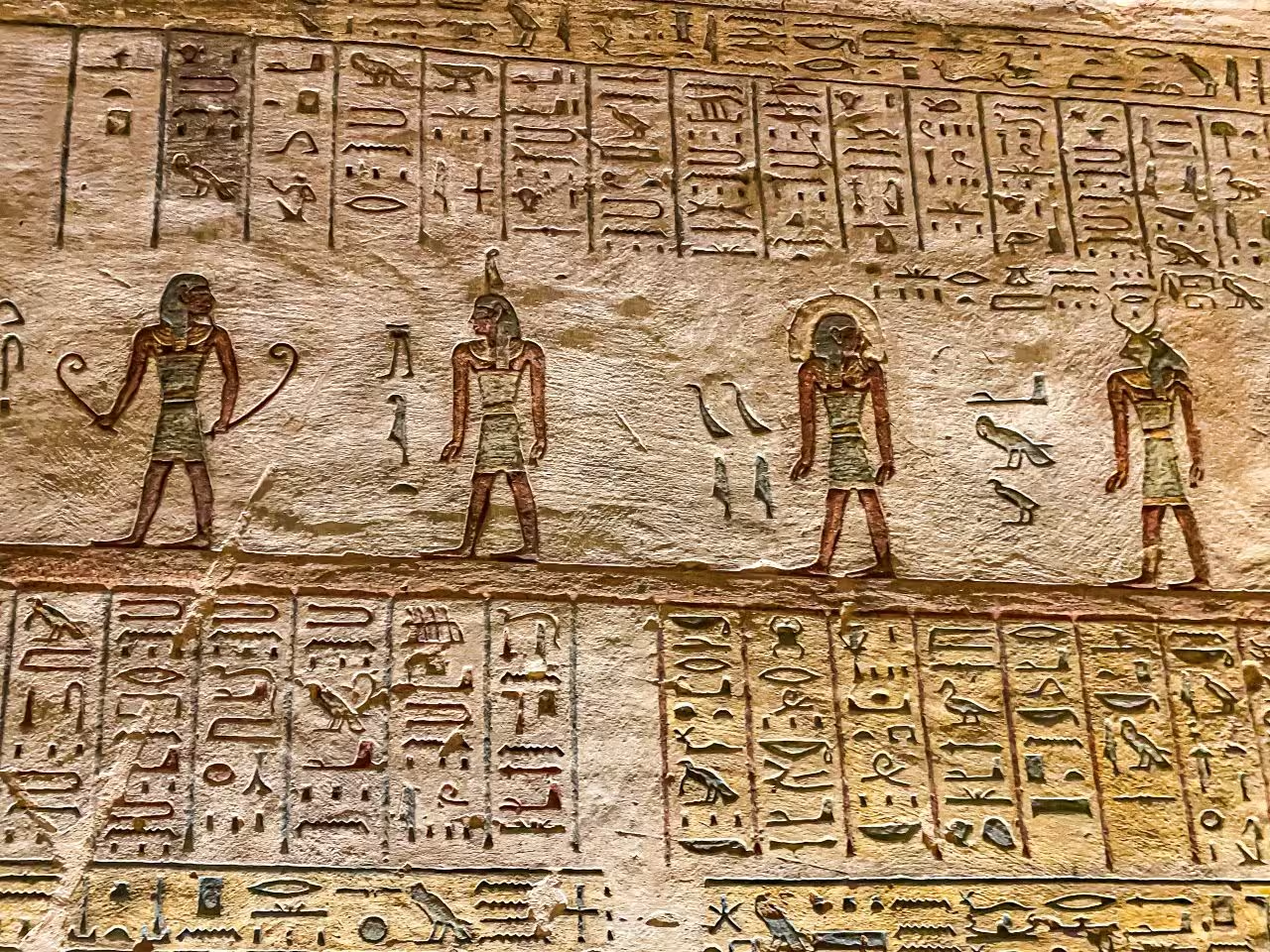
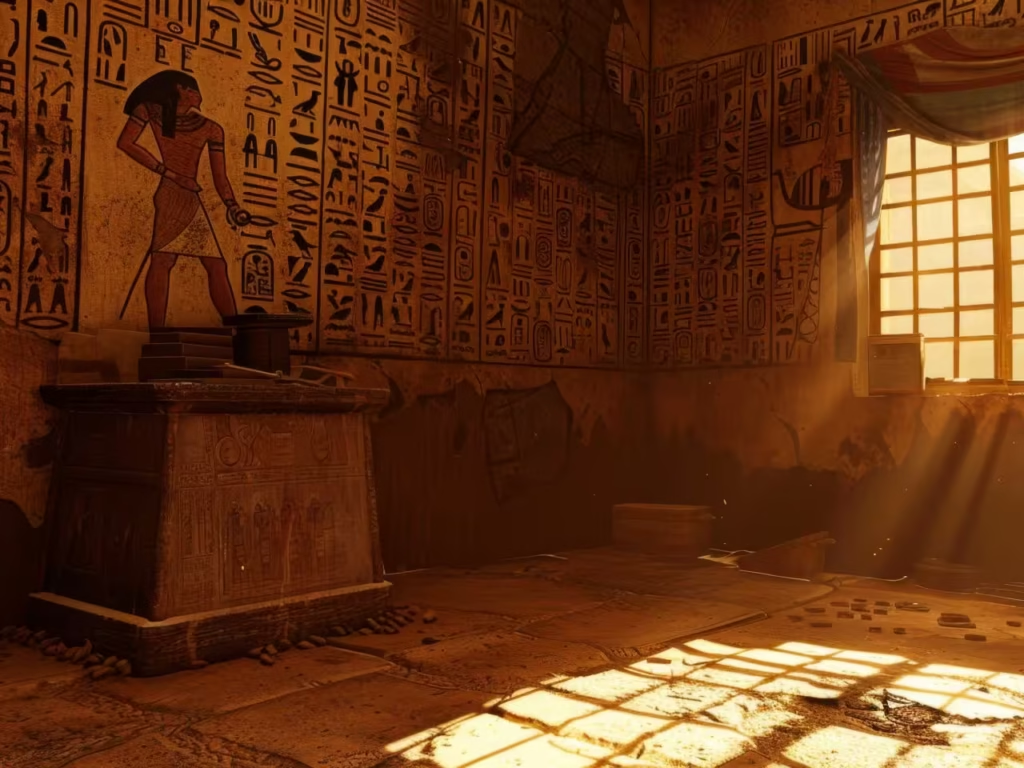
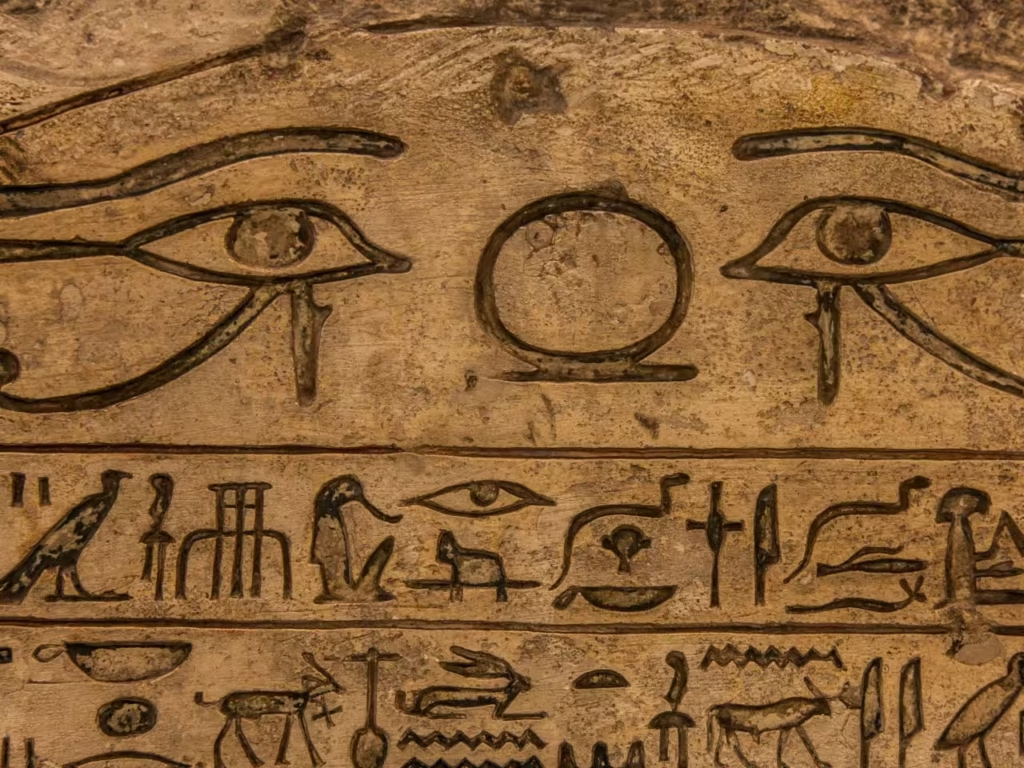
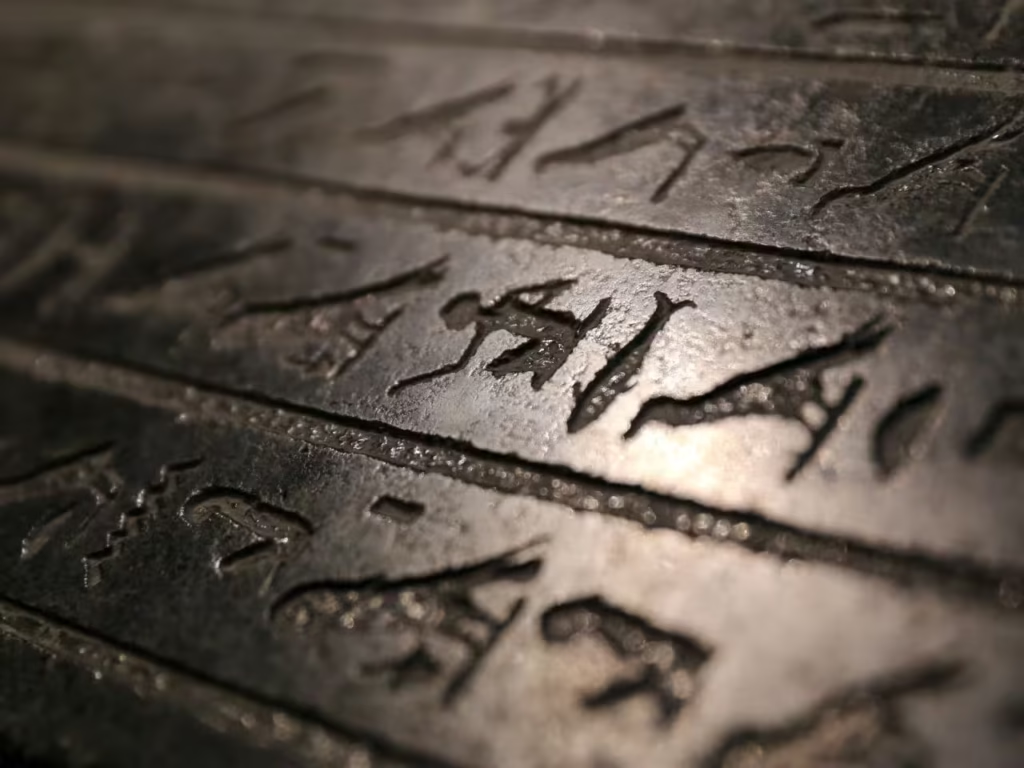
Walking through temples in Luxor or the Valley of the Kings, you can still see this ancient language carved into walls. The symbols may look mysterious, but they represent a complete writing system that once recorded everything from royal decrees to spiritual beliefs.
Arabic only became widespread after the Islamic conquest of Egypt in the 7th century. Gradually, it replaced earlier languages in daily use, though traces of the past still remain. This layered history is what makes Egypt’s language story so unique and deeply connected to its ancient civilization.
Ancient Egyptian Language: Language and Hieroglyphic Writing
When exploring What Are The 3 Main Languages In Egypt, it’s impossible to ignore the deep roots of the ancient Egyptian language, which shaped everything that came after. This language was once the voice of one of the world’s greatest civilizations, used in daily life, religion, and royal communication.
The most famous form of this language is hieroglyphic writing. These symbols, often carved into temple walls and tombs, were not just decorative—they carried meaning, stories, and beliefs. Walking through places like Karnak or the Valley of the Kings, you can still see these detailed carvings, many of which remain clear after thousands of years.
It may look complex, but hieroglyphics combined pictures, sounds, and ideas into one system. Priests and scribes used it for religious texts and important records, while simpler scripts like Hieratic were used for everyday writing.
Even today, visitors are fascinated by how advanced this system was. Guides often explain how each symbol tells part of a larger story, turning temple walls into something like ancient books. This early language is not spoken anymore, but it remains one of Egypt’s most powerful cultural legacies.
History of the Ancient Egyptian Language
To understand Egypt today, it helps to look back at how its earliest language developed over time. Many people ask, Is Egyptian a language, and the answer lies in this long history. Ancient Egyptian was indeed a real language, but it changed across thousands of years into different forms before eventually disappearing from daily use.
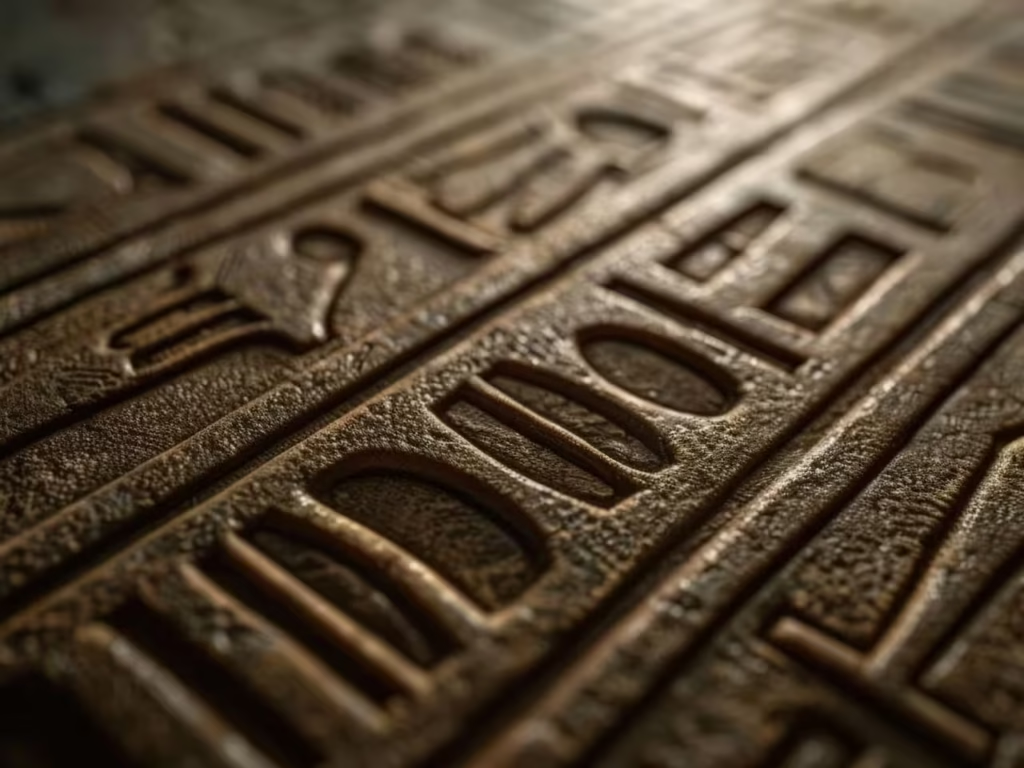
It began with hieroglyphics, the symbolic writing seen on temple walls and tombs. Over time, simpler scripts like Hieratic and Demotic were created to make writing faster and more practical. These forms were used for administration, trade, and daily communication, showing how language adapted to everyday life.
Later, the language evolved into Coptic, written using a modified Greek alphabet. This stage marked the final phase of ancient Egyptian before Arabic became dominant. Today, Coptic survives mainly in religious contexts, preserving a link to the past.
When you visit museums or ancient sites, you are not just looking at art—you are seeing a language that grew, changed, and eventually transformed into something new. This long evolution explains how Egypt moved from its ancient voice to the languages spoken today.
How Did Arabic Get To Egypt?
Arabic arrived in Egypt during the 7th century, following the Islamic conquest led by Arab the Muslims. This moment marked a major turning point in the country’s cultural and linguistic history. When discussing What Are The 3 Main Languages In Egypt, this transition explains why Arabic became the dominant language we hear today.
At first, Arabic was mainly used by rulers and in administration, while the local population continued speaking earlier forms of the Egyptian language, including Coptic. Over time, however, Arabic gradually spread through trade, religion, and daily communication. As Islam expanded, Arabic also became the language of religious practice, which helped it gain even more influence.
This shift didn’t happen overnight. Historians believe it took several centuries for Arabic to fully replace older languages in everyday use. By the medieval period, it had become the primary spoken language across most of Egypt.
Today, as you walk through Cairo’s streets or explore temples in Luxor, you are hearing the result of this long transformation. Arabic is now at the heart of communication in Egypt, shaping everything from casual conversations to cultural identity.
Why Isn’t Ancient Egyptian Spoken Anymore?
Ancient Egyptian is no longer spoken because it gradually evolved and was replaced over time by newer languages. When exploring What is the most spoken language in Egypt, it becomes clear that Arabic took over this role, but the shift happened slowly across centuries.
In the early stages, ancient Egyptian didn’t simply disappear—it changed form. It moved from hieroglyphics to simpler scripts, then later became Coptic. For a long time, people continued using Coptic in daily life, especially in religious and local communities. However, after Arabic spread across Egypt, it became the dominant language for communication, trade, and administration.
Historians believe religion played a major role in this transition. As Arabic became the language of religious practice and governance, more people began adopting it in everyday life. Over generations, older forms of the language faded from common use.
Today, ancient Egyptian survives only in written form and through Coptic liturgy. When you walk inside tombs or temples, the carvings you see are not just art—they are the last visible traces of a language that once defined an entire civilization.
What Are The 3 Main Languages In Egypt for Tourists and Everyday Use
For travelers, understanding What Are The 3 Main Languages In Egypt makes navigating the country much easier from the moment you arrive. In everyday situations, Egyptian Arabic is the most useful for basic interactions like shopping, ordering food, or greeting locals. Even learning a few simple words can create friendly moments and make your experience feel more personal.
At the same time, English plays a major role in tourism. In hotels, airports, museums, and guided tours, you will find that communication in English is widely available. This is especially true in places like Cairo, Luxor, and Hurghada, where visitors rely on it daily. Many travelers are surprised by how easy it is to move around without speaking Arabic fluently.
Coptic, while not used in daily conversation, adds a deeper cultural layer. You may hear it during visits to historic churches or when guides explain Egypt’s ancient roots.
This combination of languages creates a smooth balance. You can explore confidently using English, connect with locals through Egyptian Arabic, and experience history through Coptic—all within a single journey across Egypt.
FAQs About Language in Egypt
Many travelers have quick questions about communication before visiting Egypt, especially when trying to understand its language diversity. One common topic is Egypt language in the past, which often surprises people. Ancient Egyptians spoke a completely different language that evolved into Coptic, long before Arabic became dominant.
Another frequent question is whether tourists need to learn Arabic. In most cases, the answer is no. English is widely used in tourist areas, hotels, and tours, making travel simple. However, learning a few basic Arabic words can make interactions more enjoyable and personal.
Visitors also ask if people speak the same language across the country. While Egyptian Arabic is understood almost everywhere, regional variations like Saidi Arabic or Nubian languages can sound quite different. Still, locals usually adjust their speech when talking to visitors.
Some travelers wonder if communication will be difficult in smaller towns. In reality, even in less touristy areas, people are often helpful and find ways to communicate.
Overall, language in Egypt is rarely a barrier. Instead, it becomes part of the experience, adding depth and connection to your journey.
Conclusion
Understanding What Are The 3 Main Languages In Egypt gives you a deeper appreciation of the country beyond its famous landmarks. It’s not just about pyramids and temples—it’s about how people communicate, share stories, and keep their history alive through language.
From the widely spoken Egyptian Arabic used in daily conversations, to Modern Standard Arabic seen in formal settings, and the ancient roots preserved in Coptic, each language adds a different layer to the Egyptian experience. Many travelers are surprised by how naturally these languages exist side by side, shaping both modern life and cultural identity.
As you move between Cairo’s busy streets, Luxor’s historic temples, and the calm Nile views in Aswan, you begin to notice how language connects everything. Even simple interactions—asking for directions or greeting a local—become part of the journey.
In the end, language in Egypt is not a barrier but a gateway. It helps you connect with people, understand traditions, and experience the country in a more meaningful and memorable way.