Learn Egyptian Gods Names and Powers and discover the legendary deities that shaped Ancient Egypt’s history and beliefs. It may look like mythology, but these gods were central to life across the Nile. You can still see their stories carved into temple walls and displayed in museums today. This guide will walk you through their powers, roles, and the lasting impact they have on Egypt travel experiences.
What are Egyptian gods ?
Egyptian Gods Names and Powers refer to a complex system of divine beings that ancient Egyptians believed controlled every aspect of life, from the rising of the sun to the journey after death. These gods were not distant figures; they were deeply connected to daily life, nature, and the afterlife.
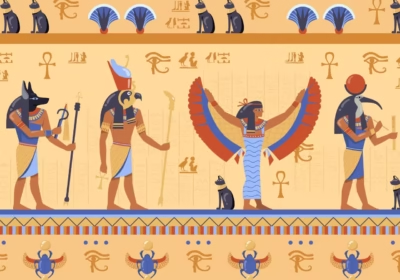
In simple terms, Egyptian gods were powerful spiritual forces, each with a specific role. For example, Ra represented the sun, Osiris ruled the afterlife, and Isis symbolized magic and motherhood. What makes them unique is how they were often shown with human bodies and animal heads, reflecting their connection to both the natural and spiritual worlds.
When you walk through temples in Luxor or stand before massive carvings at Karnak, you quickly realize these were not just stories. The walls are filled with detailed scenes showing gods interacting with kings and guiding people. Many visitors are surprised to see how vivid and well-preserved these images still are after thousands of years.
In fact, ancient Egyptians believed their gods maintained balance in the universe, something they called “Ma’at.” Without the gods, order would collapse into chaos. This belief shaped everything—from how temples were built to how pharaohs ruled the land.
The Relationship Of The Egyptians With Their Gods
The relationship between ancient Egyptians and their gods was deeply personal and constant, shaping both daily routines and major life events. People did not simply worship from a distance—they believed the gods were actively present in their lives, influencing health, harvests, protection, and even fate.
In many homes, small altars were dedicated to household deities, while larger temples served as sacred spaces where priests performed rituals on behalf of the people. Most travelers don’t realize that ordinary Egyptians rarely entered the inner parts of temples; instead, they connected with the divine through prayers, offerings, and festivals held outside.
When you visit Egypt today, this connection becomes very real. Inside museums, especially during a visit to the Tour Museum Of Egyptian Civilization, you can see statues, offerings, and artifacts that reveal how seriously Egyptians honored their gods. These objects were not decorative—they were believed to hold spiritual power.
Festivals were another important link. During these events, statues of gods were carried through cities so people could “meet” their deities. This created a powerful emotional bond, making religion feel alive rather than distant. Even today, standing among temple ruins, you can almost sense how strong that relationship once was.
The Importance of Gods in Ancient Egyptian Believes
Gods were at the very heart of ancient Egyptian beliefs, shaping how people understood the world, life, and death. Egyptian Gods Names and Powers were not just myths—they were explanations for everything around them, from the flooding of the Nile to the movement of the الشمس across the sky.
Ancient Egyptians believed that every natural event had a divine cause. If crops grew well, it was thanks to the gods. If disaster struck, it was often seen as a sign of divine imbalance. Because of this, maintaining harmony with the gods was essential. This balance, known as Ma’at, guided laws, morality, and even how pharaohs ruled the land.
When you walk through tombs in places like the Valley of the Kings, you’ll notice walls covered in detailed scenes of gods guiding souls in the afterlife. These were not decorations—they were instructions and protection for the journey beyond death. It may look symbolic, but to the ancient Egyptians, it was completely real.
In fact, entire temples were built to honor specific deities, where rituals were performed daily to “feed” and care for them. This shows how central these beliefs were—without the gods, life itself would lose meaning and order.
Why Egyptian Gods Names and Powers Still Fascinate Travelers Today
Even today, travelers remain deeply intrigued by the stories and symbolism behind ancient Egyptian deities. What makes this fascination so powerful is that Egyptian Gods Names and Powers are not hidden in books—they are carved into massive temple walls, painted inside tombs, and standing as statues across Egypt.
When you explore places like Luxor, the experience feels almost alive. Inside the Valley of the Kings Tour, visitors walk through royal tombs where gods like Osiris and Anubis are vividly illustrated guiding pharaohs into the afterlife. The colors, details, and expressions are still incredibly clear, making it easy to imagine the beliefs of ancient Egyptians.
Many visitors are surprised by how human these gods seem. They show emotions, relationships, and even conflicts, which makes their stories relatable despite being thousands of years old. This is one reason why guides often turn temple visits into storytelling experiences rather than simple history lessons.
In fact, the mystery surrounding these gods adds to their appeal. Historians are still uncovering meanings behind certain symbols and rituals. Because of this, every visit feels like discovering something new, keeping the fascination alive for modern travelers exploring Egypt.
Which Egyptian Gods Were Most Important?
The most important deities in ancient Egypt were those connected to creation, life, death, and cosmic balance. Egyptian Gods Names and Powers often highlight a group of major gods who played central roles in both mythology and daily worship.
At the top of this divine hierarchy was Ra, the sun god, believed to travel across the sky each day and through the underworld at night. Osiris was equally significant as the ruler of the afterlife, offering hope of resurrection. His story, along with Isis and Horus, formed one of the most powerful mythological cycles in Egypt. Isis, known for her magic and protection, was widely loved, while Horus symbolized kingship and divine authority.
Another key figure was Amun, especially during the New Kingdom, when he became associated with Ra as Amun-Ra, the king of gods. Many travelers standing in Karnak Temple are surprised to learn it was primarily dedicated to him, showing his immense importance.
These gods were not isolated figures. They worked together to maintain order, guide souls, and protect the land. This is why their images appear repeatedly across temples and tombs, reflecting their lasting influence on ancient Egyptian life and belief.
In ancient Egypt, who was the God in charge?
There was no single permanent “god in charge” in ancient Egypt, but at different times, certain deities rose above others in power and importance. This often depended on the era and the ruling pharaoh. However, many historians believe that gods like Amun-Ra were considered the closest to a supreme deity, especially during the New Kingdom.
Amun, originally a local god of Thebes, became incredibly powerful when combined with Ra, the sun god. As Amun-Ra, he was seen as the creator and ruler of all gods and humans. Standing inside the vast halls of Karnak, you can still feel how dominant his worship once was.
Interestingly, power among the gods was not fixed. In earlier times, Ra alone was seen as the chief god, while in other traditions, gods like Ptah or Atum were considered creators. This flexible system made Egyptian religion unique compared to later monotheistic beliefs.
If you want to explore how royal women and queens were connected to divine authority, a visit to the Valley of the Queens Tour offers fascinating insights. The tombs there reveal how even royal families were closely tied to the will of the gods, showing that divine power influenced every level of society.
What Did Egyptian Gods Do For Their People?
Egyptian Gods Names and Powers were not just symbolic—they were believed to actively protect, guide, and sustain the people of ancient Egypt. Every god had a purpose, and together they ensured that life continued in balance and harmony.
For example, gods like Hapi were responsible for the annual flooding of the Nile, which made agriculture possible. Without this, Egypt could not survive. Other deities, such as Bastet, protected homes and families, while Thoth was believed to give knowledge and wisdom. It may sound mythical, but for ancient Egyptians, these roles were very real.
One interesting thing is how gods were also seen as protectors in the afterlife. When you walk inside tombs in Luxor, you’ll notice scenes of deities guiding souls, offering safety from dangers in the underworld. These carvings were meant to ensure a safe journey after death.
People also prayed to the gods for healing, success, and protection from evil. Small offerings, daily rituals, and temple ceremonies were all ways to stay connected. Because of this, the gods were not distant—they were part of every moment in an Egyptian’s life, from birth to the afterlife.
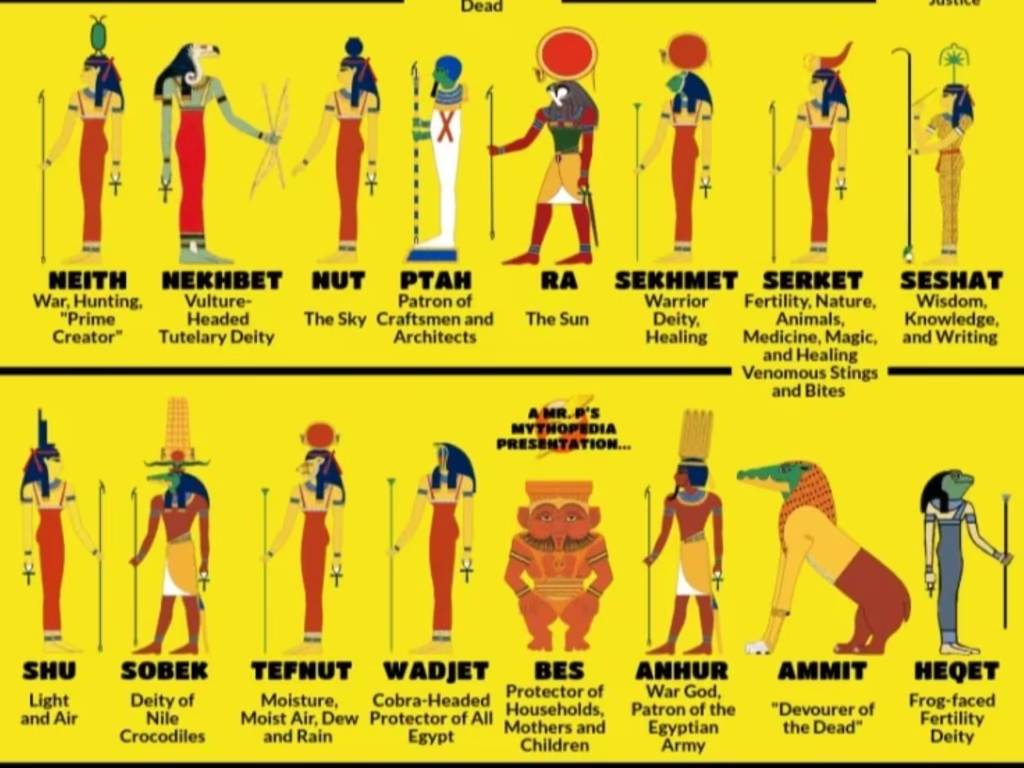
What was a god of the afterlife in Egypt?
The most important god of the afterlife in ancient Egypt was Osiris, a powerful deity associated with death, resurrection, and eternal life. Egyptians believed that after death, every soul would stand before Osiris to be judged, making him one of the most feared and respected gods.
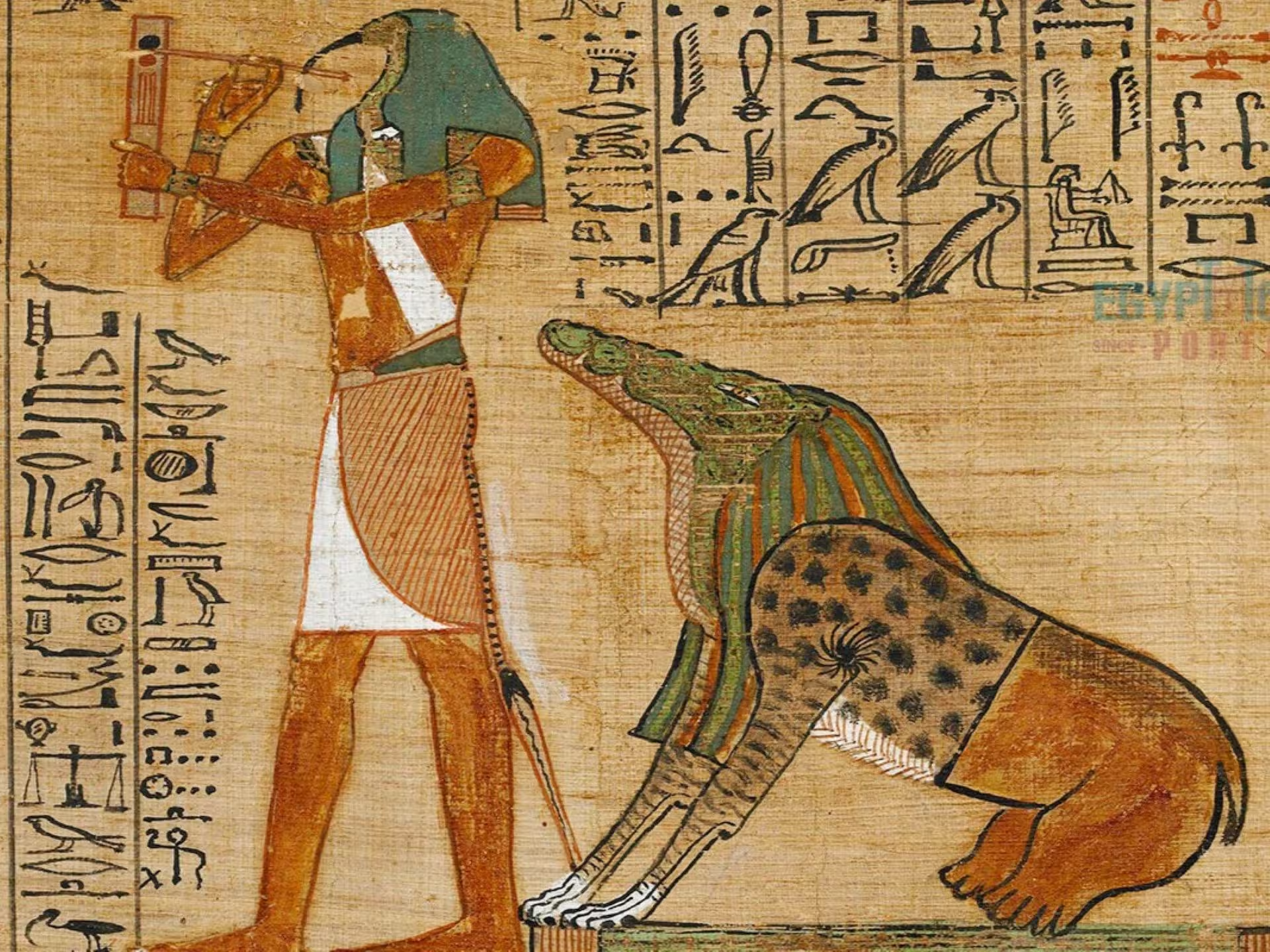
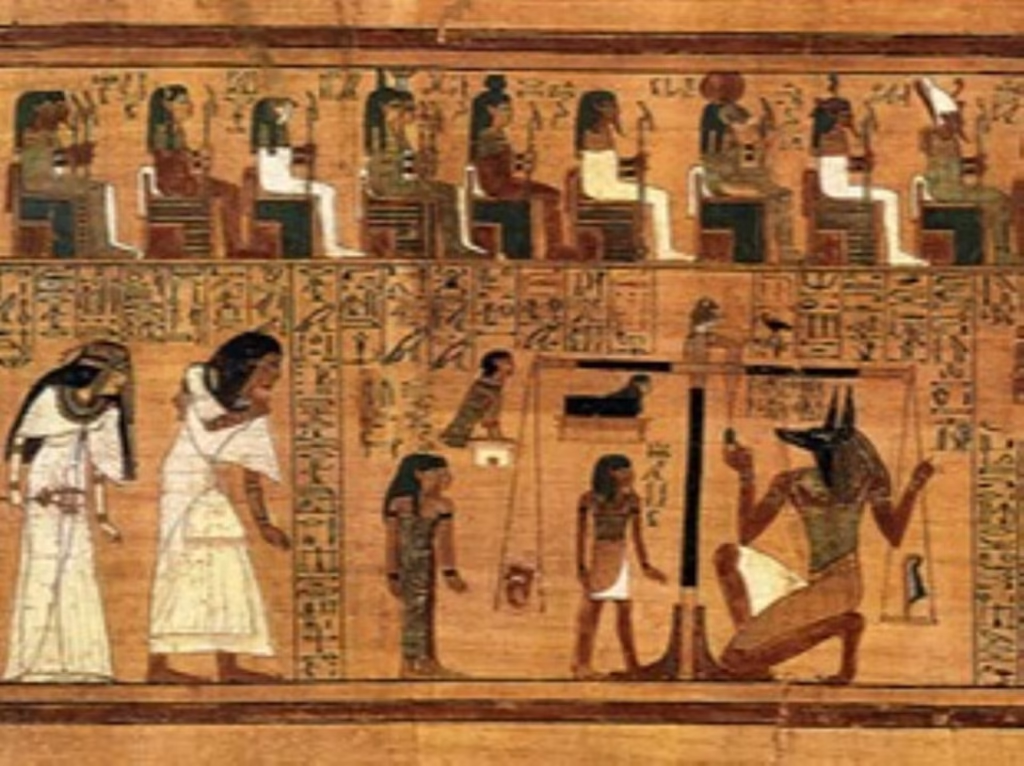
According to ancient beliefs, Osiris ruled the underworld and decided whether a soul was worthy of entering paradise. This judgment involved weighing the heart against the feather of truth, a scene you can still see clearly illustrated on tomb walls. It may look symbolic, but for ancient Egyptians, this was a real and crucial moment after death.
Other gods also played important roles in the afterlife journey. Anubis, with his jackal head, guided souls and protected the dead, while Thoth recorded the results of judgment. Many travelers are surprised to see how detailed and structured this process was when visiting temples and tombs.
If you explore these beliefs during a Luxor Temple Tour, you’ll notice how temples were not just for worship but also for preparing the soul for eternity. The carvings and inscriptions reveal a deep concern with life after death, showing how central the afterlife was to Egyptian culture.
Top 10 strongest Egyptian gods and their legendary influence
Egyptian Gods Names and Powers are best understood when looking at the most influential deities, each with a unique role that shaped ancient Egyptian life and beliefs.
Egyptian God Ra
was the sun god and one of the most powerful figures in Egyptian mythology. He was believed to sail across the sky during the day and journey through the underworld at night, bringing light and life to the world.
Egyptian God Osiris
The god of death and the afterlife, represented resurrection and eternal life. His story of death and rebirth became central to Egyptian beliefs about what happens after death.
Egyptian God Horus
The god of goodness and light, was closely linked to kingship. Pharaohs were often seen as his earthly form, making him a symbol of protection and rightful rule.
Egyptian God Seth
The god of war and chaos, represented disorder and conflict. Despite his destructive nature, he was still respected as a necessary force in maintaining balance.
Egyptian God Anubis
Known for mummification, guided souls into the afterlife. His presence in tombs across Egypt shows how important he was in funeral rituals.
Egyptian God Amun
The god of air, rose to become one of the most powerful deities, especially in Thebes. Many temples, including Karnak, were dedicated to his worship.
Egyptian God Aton
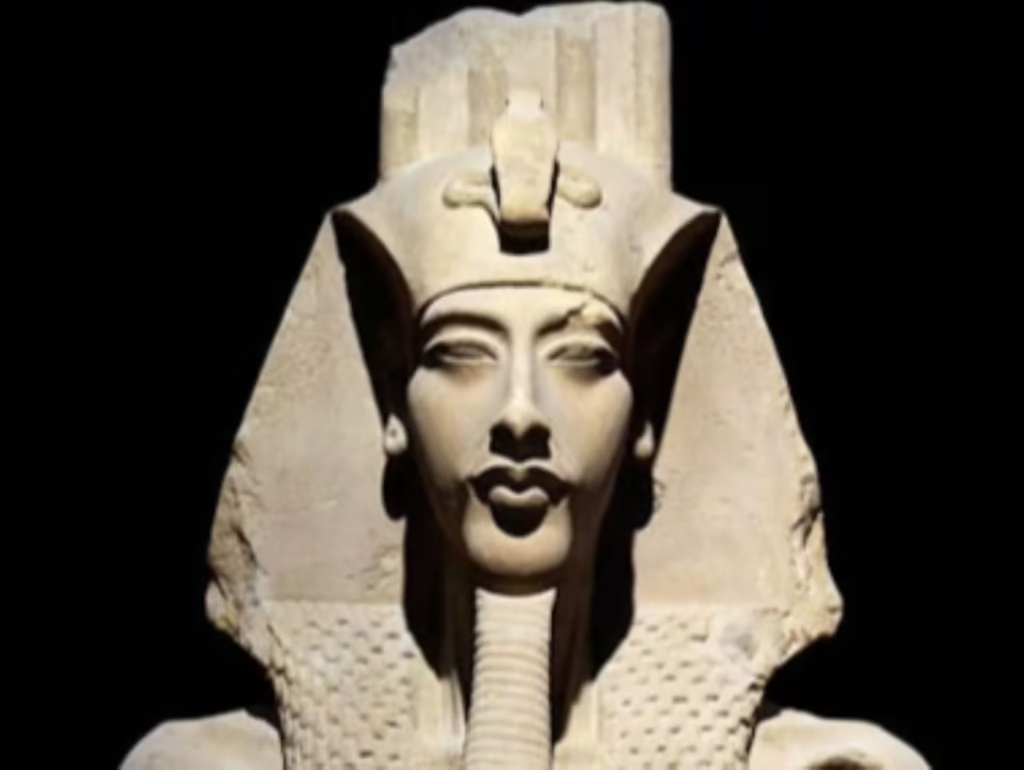
Another form of the sun god, became central during a short period of religious reform under Akhenaten, where he was worshipped almost exclusively.
Egyptian God Bes
Was quite different from other gods. He protected households, especially women and children, and was associated with music and joy.
Egyptian God Hapi
Controlled the flooding of the Nile, making him essential for agriculture and survival in ancient Egypt.
Egyptian God Khonsu
The lunar god, was linked to time and healing. His cycles were believed to influence both health and the passage of days.
Egyptian God Khnum
The god of potters, was said to shape humans on a potter’s wheel, giving life to each individual.
Egyptian God Min
Represented fertility and harvest, playing a key role in agricultural success and prosperity.
Egyptian God Ptah
The creator god, was believed to have formed the world through thought and speech, making him one of the most intellectual deities.
Egyptian God Sobek
The crocodile god, symbolized strength and protection, especially connected to the Nile’s power.
Egyptian God Thoth
The god of wisdom and science, was credited with writing, knowledge, and keeping balance in the universe.
Top Ancient Egyptian Goddesses and their Powers.
Ancient Egyptian goddesses were just as powerful and influential as their male counterparts, often representing protection, magic, motherhood, and cosmic balance. Their presence can still be seen clearly on temple walls, especially during a visit to the Karnak Temple Tour, where many of these divine figures are carved in remarkable detail.
Isis is perhaps the most famous goddess, known for her powerful magic and deep devotion. She was believed to have resurrected Osiris and protect the throne of Egypt, making her a symbol of loyalty and strength. Hathor, on the other hand, was the goddess of love, joy, and music, often associated with celebration and happiness.
Sekhmet, a fierce lioness goddess, represented war and healing at the same time. It may seem surprising, but she was both destructive and protective, showing the dual nature of divine power. Bastet, once a lioness and later depicted as a cat, protected homes and families, bringing comfort and safety.
Another important figure is Nephthys, who was linked to mourning and protection of the dead, often appearing alongside Isis in funerary scenes. Meanwhile, Ma’at was not just a goddess but a concept of truth and balance, guiding the entire universe.
These goddesses were deeply respected, and their stories continue to fascinate visitors exploring Egypt today.
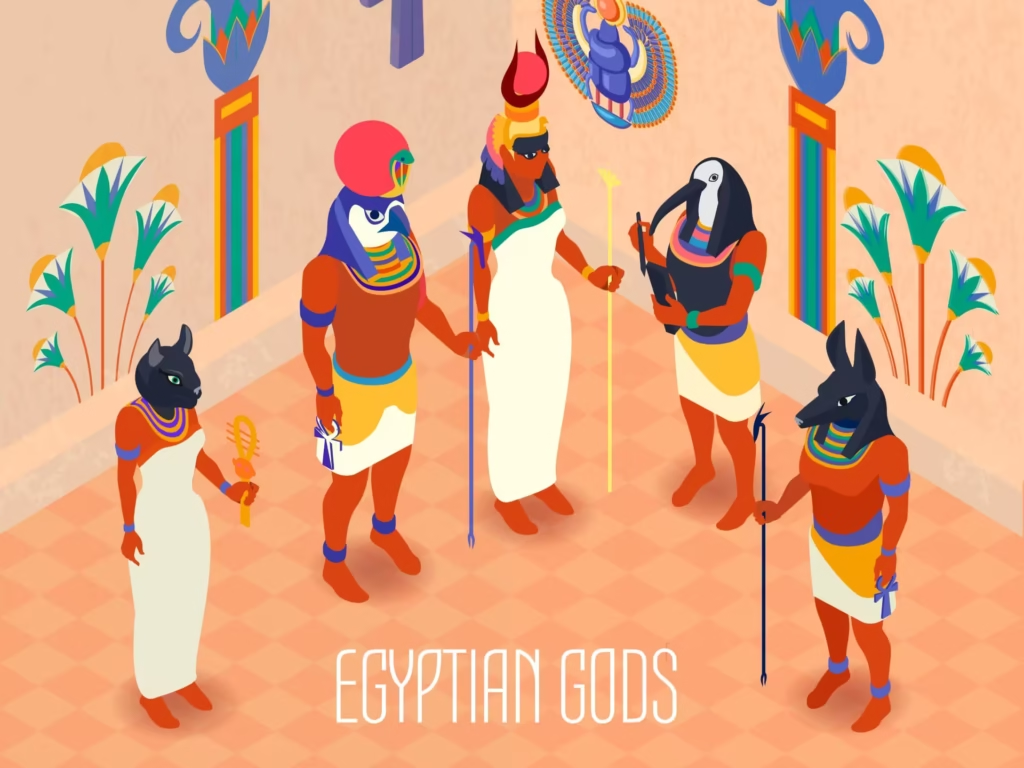
Egyptian gods family tree and divine connections explained
Egyptian Gods Names and Powers are easier to understand when you explore the divine connections between gods and goddesses, forming a rich and complex family network that influenced ancient beliefs.
Egyptian Goddesses, Amunet
Amunet was the female counterpart of Amun and represented hidden power and mystery. She was part of the Ogdoad, a group of primordial deities linked to creation. Though less visible in temples, her role was essential in balancing male divine energy.
Egyptian Goddesses, Anuket
Anuket was associated with the Nile and its life-giving waters. Worshipped mainly in Aswan, she was part of a triad with Khnum and Satet. Travelers visiting southern Egypt often hear her name connected to fertility and the river’s flow.
Egyptian Goddesses, Bastet
Bastet, the cat goddess, symbolized protection, home, and motherhood. She was once a lioness goddess but later became gentler in form. Many visitors are surprised by how beloved she was among ordinary Egyptians.
Egyptian Goddesses, Hathor
Hathor represented love, joy, and music. Often shown with cow horns, she was also linked to motherhood and the sky. Her temples, especially at Dendera, reveal her importance in both daily life and royal rituals.
Egyptian Goddesses, Hatmehit
Hatmehit was a lesser-known goddess connected to fish and fertility in Lower Egypt. Though not as famous, she played a role in local beliefs and symbolized abundance.
Egyptian Goddesses, Heket
Heket, depicted as a frog, was the goddess of birth and creation. She was believed to help women during childbirth, making her one of the most protective deities for families.
Egyptian Goddesses, Isis
Isis was one of the most powerful and widely worshipped goddesses. Known for her magic, she revived Osiris and protected her son Horus. Her influence spread far beyond Egypt.
Egyptian Goddesses, Maat
Ma’at represented truth, justice, and cosmic balance. Rather than a typical goddess, she embodied a universal principle that governed both gods and humans.
Egyptian Goddesses, Mafdet
Mafdet was a protector against evil, often associated with justice and execution. She was believed to defend against dangerous creatures like snakes and scorpions.
Egyptian Goddesses, Mut
Mut was a mother goddess and queen of the gods, often paired with Amun. Together with Khonsu, they formed the famous Theban triad worshipped in Karnak.
Egyptian Goddesses, Nephthys
Nephthys, sister of Isis, was linked to mourning and protection of the dead. She frequently appears in funerary scenes, supporting souls in the afterlife.
Egyptian Goddesses, Seshat
Seshat was the goddess of writing, measurement, and knowledge. She assisted in recording history and was important in temple construction rituals.
Egyptian Goddesses, Sekhmet
Sekhmet, the lioness goddess, embodied both destruction and healing. She was feared for her القوة but also respected for her ability to protect and restore balance.
Egyptian Goddesses, Tefnut
Tefnut, associated with moisture and rain, played a key role in creation myths. She helped maintain natural balance, working alongside her brother Shu, the god of air.
Gender of Ancient Egyptian Deities
Gender in ancient Egyptian religion was fluid, symbolic, and deeply meaningful rather than strictly defined. Gods and goddesses often represented complementary forces, working together to maintain balance in the universe. This balance was essential, and many deities had both masculine and feminine aspects depending on their role or story.
In many cases, male gods symbolized strength, authority, or creation, while female deities represented protection, fertility, and magic. However, this was not a strict rule. Goddesses like Sekhmet showed fierce power, while gods like Osiris were associated with rebirth and nurturing aspects of life after death.
One interesting detail visitors notice during a Luxor Museum Tour is how similar some male and female deities appear in statues and carvings. The differences are often subtle, such as clothing, posture, or symbolic items. This reflects how gender was more about function than physical form.
Some deities even changed roles or merged with others over time, blending masculine and feminine traits. Because of this, gender in ancient Egypt was less about identity and more about balance, duality, and the natural order that governed both the divine and human worlds.
Characteristics & Roles of Ancient Egyptian Gods & Goddesses
Egyptian Gods Names and Powers are best understood through their distinct characteristics and clearly defined roles in ancient Egyptian life. Each deity represented a force of nature, a human need, or a universal concept, making them essential to both spiritual and daily existence.
One key characteristic was their unique appearance. Many gods had human bodies with animal heads, such as the falcon-headed Horus or the jackal-headed Anubis. It may look unusual at first, but these forms symbolized specific qualities like strength, protection, or intelligence. These visual clues helped people instantly recognize each god’s role.
Another important aspect was specialization. Unlike some mythologies, Egyptian deities had very specific duties. Thoth governed wisdom and writing, Hathor represented joy and love, while Sobek controlled the power of the Nile. This division made the system highly organized and meaningful.
When you walk through temples in Luxor or Karnak, you’ll notice how consistently these roles are depicted in carvings. Gods are shown performing their duties—protecting kings, guiding souls, or maintaining balance.
Most travelers don’t realize that these roles were not just symbolic. Ancient Egyptians truly believed the gods were actively managing the world. Because of this, every ritual, offering, and prayer was designed to keep these divine forces in harmony.
The Triad
One of the most fascinating aspects of Ancient Egyptian religion is the concept of divine groups known as triads—families of three gods worshipped together. These triads usually consisted of a father, a mother, and a child, representing balance, creation, and continuity. In fact, many examples of Ancient Egyptian gods and goddesses were organized this way, reflecting how important family structure was even in the divine world.
The most famous triad is the Theban triad: Amun, Mut, and Khonsu. Amun was the powerful creator god, Mut the mother goddess, and Khonsu their son, associated with the moon. When you walk through Karnak Temple, you can still see clear depictions of this family carved into the walls, showing their importance in Thebes.
Another well-known triad comes from Abydos, featuring Osiris, Isis, and Horus. Their story is one of death, magic, and rebirth, and it played a central role in Egyptian beliefs about the afterlife.
These triads helped people understand the relationships between gods in a simple, human-like way. Instead of isolated deities, they formed connected units, making the entire belief system feel more structured and relatable to everyday life.
The Ennead
The Ennead was one of the most important religious systems in ancient Egypt, representing a group of nine deities believed to be responsible for the creation of the world. Egyptian Gods Names and Powers are strongly reflected in this structure, as it explains how the universe and divine order first came into existence.
According to tradition centered in Heliopolis, the Ennead began with Atum, the creator god, who brought himself into being. From him came Shu (air) and Tefnut (moisture), who then gave birth to Geb (earth) and Nut (sky). Their children—Osiris, Isis, Seth, and Nephthys—completed the nine.
This family was not just symbolic; it explained how natural elements and human experiences were connected. For example, the separation of earth and sky by Shu helped Egyptians understand the structure of the world. It may sound like mythology, but it served as a powerful way to interpret life and nature.
When visiting temple walls or museum displays, especially in places like Cairo or Luxor, you’ll often see scenes representing this divine group. These carvings helped ancient Egyptians visualize creation itself, making the Ennead one of the most influential concepts in their religious system.
Main centers of worship in Ancient Egypt.
Ancient Egypt was filled with powerful religious centers where specific gods were worshipped, and each city often had its own main deity. Understanding these locations helps make sense of the Egyptian gods family tree, as different regions focused on different divine families and connections.
Thebes, modern-day Luxor, was one of the most important centers, dedicated mainly to Amun. Walking through Karnak Temple, you can still feel the scale of devotion that once took place there. Nearby, Luxor Temple also played a key role in religious festivals linking gods and kings.
Heliopolis, near modern Cairo, was the center of sun worship and closely tied to Ra and the Ennead creation story. Memphis, one of Egypt’s oldest capitals, was dedicated to Ptah, the creator god associated with craftsmanship and design.
Further south, Aswan was known for the worship of Khnum, the potter god, along with Anuket and Satet, forming a local triad connected to the Nile. Meanwhile, Abydos became a major pilgrimage site for Osiris, drawing people who believed it held a connection to the afterlife.
Each of these centers was not just a place of worship, but a living part of the religious system, where myths, rituals, and divine relationships were brought to life.
The first Monotheism
Egyptian Gods Names and Powers took a surprising turn during one of the most unusual periods in ancient history—the rise of what many consider the first form of monotheism. This happened during the reign of Pharaoh Akhenaten, who introduced the exclusive worship of a single god, Aten.
Aten was represented as the sun disk, and unlike traditional gods, he had no human or animal form. Instead, he was shown as rays of sunlight ending in hands, giving life to the king and his family. This shift was radical because Egypt had always believed in multiple gods working together to maintain balance.
Akhenaten even moved the capital to a new city, Amarna, to focus entirely on Aten worship. Temples changed, rituals were simplified, and the power of priests tied to other gods—especially Amun—was reduced. It may seem like a brief experiment, but it marked a major change in religious thinking.
However, this monotheistic phase did not last long. After Akhenaten’s death, Egypt quickly returned to its traditional beliefs. When you visit temples today, you’ll notice that most references to Aten were removed or replaced, showing how deeply rooted the original system of multiple gods remained.
What Are Some Of The Strangest Egyptian Gods?
Some of the most unusual deities in ancient Egypt stand out not just for their roles, but for their strange appearances and unexpected powers. When exploring Egyptian gods names and powers male, you quickly discover that not all gods fit the typical image of strength or beauty—some were truly unique.
Take Bes, for example. Unlike most gods, he was shown as a dwarf with exaggerated features, sticking out his tongue to scare away evil spirits. It may seem odd, but he was one of the most loved household protectors. Then there’s Khnum, the ram-headed god who was believed to create humans on a potter’s wheel—an image that many visitors find both fascinating and unusual.
Another striking figure is Sobek, the crocodile god. Representing both danger and protection, he embodied the unpredictable power of the Nile. Meanwhile, Taweret, a goddess with the body of a pregnant hippopotamus, protected women during childbirth.
When you walk through temples or museums in Egypt, these strange forms suddenly make sense. They reflect how ancient Egyptians saw the world—not as simple or perfect, but as powerful, mysterious, and sometimes unpredictable.
How do modern Egyptians feel about the Egyptian gods and goddesses of old?
Egyptian Gods Names and Powers are still widely recognized in modern Egypt, but they are viewed today as part of history and cultural heritage rather than active religious beliefs. Most Egyptians now follow monotheistic religions, so the ancient gods are no longer worshipped—but their presence is still deeply respected.
For many Egyptians, these deities represent a proud connection to one of the world’s greatest civilizations. You’ll often hear guides in Luxor or Aswan speak passionately about gods like Ra, Isis, and Osiris, not as living forces, but as symbols of identity and history. This is why temples and monuments are carefully preserved and celebrated.
Interestingly, many visitors notice that ancient symbols still appear in modern art, souvenirs, and even storytelling. It’s not uncommon to see the Eye of Horus or statues of Anubis in markets, reflecting how these figures remain culturally meaningful.
Most travelers don’t realize that Egyptians grow up learning about these gods in school, much like historical figures. So while belief has changed, appreciation has not. The ancient gods are seen as a legacy—one that continues to attract millions of visitors who come to Egypt to experience their stories firsthand.