Understand What Part Of Africa Is Egypt In and why this question matters more than you might think when planning a trip. Egypt is firmly part of North Africa, yet it also connects to the Middle East, creating a unique blend of cultures. Travelers often notice this mix when visiting Cairo, temples, and museums. In this guide, you’ll discover Egypt’s exact location and what makes it so special.
Is Egypt in Africa or Asia?
At first glance, many travelers ask whether Egypt belongs to Africa or Asia, and the answer reveals why the country feels so unique. What Part Of Africa Is Egypt In becomes clearer when you understand that most of Egypt lies in northeastern Africa, while a smaller part—the Sinai Peninsula—extends into Asia.
This is why people often wonder, Is Egypt Arab or African? In reality, Egypt is both culturally connected to the Arab world and geographically rooted in Africa. This blend shapes everything from daily life in Cairo to the atmosphere around ancient temples in Luxor and Aswan.
When you visit, you can actually feel this mix. Walking through historic sites, you notice African landscapes along the Nile, yet strong Middle Eastern cultural influences in architecture, language, and traditions.
Because of this position, Egypt has always been a bridge between continents. It connected trade routes, ideas, and civilizations for thousands of years—and that role still defines the travel experience today.
What Part Of Africa Is Egypt In?
Egypt is located in the northeastern corner of the African continent, a position that gives it both strategic and cultural importance. When travelers ask about its exact place, they quickly realize that Egypt is not just in Africa—it sits at one of the most historically connected points on the continent.
Geographically, Egypt belongs to North Africa, bordered by the Mediterranean Sea to the north and vast desert landscapes stretching west and south. This location shaped ancient trade routes, allowing civilizations to grow along the Nile while connecting Africa to other regions.
When you explore the country, this geography becomes very real. Standing in Luxor, surrounded by temples and tombs, you are deep inside African history. The landscapes, climate, and even the rhythm of life along the Nile all reflect this North African identity.
Many visitors choose to experience this connection through guided journeys like Luxor Tours, where history, geography, and culture come together in one unforgettable setting.
Where Exactly Is Egypt Located on the Map?
Egypt sits in a unique position that often surprises travelers when they look at a world map. If you’re wondering What Part Of Africa Is Egypt In, the answer becomes clear visually—Egypt lies in the northeastern corner of Africa, with the Mediterranean Sea above it and the Red Sea to the east.
At the same time, many people ask, Which part of Africa is Egypt in? It belongs firmly to North Africa, yet it also touches Asia through the Sinai Peninsula. This is why Egypt appears as a bridge between two continents rather than a country isolated in one region.
When you stand in Cairo or travel south toward Aswan, everything around you feels deeply African—from the desert landscapes to the Nile Valley. But if you cross toward Sinai, the scenery and geographic identity begin to shift.
Maps don’t just show location—they explain history. Egypt’s position helped it become a meeting point of cultures, trade routes, and civilizations. Even today, that location shapes the travel experience, whether you are exploring ancient tombs or navigating the busy streets of the capital.
Where is Egypt in Africa?
Egypt is positioned in the northeastern corner of Africa, a location that has shaped its identity for thousands of years. It sits between the Mediterranean coastline in the north and vast desert landscapes stretching deep into the continent. This unique placement makes Egypt one of the most recognizable countries in North Africa.
When you explore the country, this geography becomes part of the experience. In Cairo, you feel the energy of a major African capital, while just a short distance away, the Giza Plateau opens into wide desert views that have defined the region since ancient times.
Many travelers truly understand Egypt’s place in Africa when they visit early in the morning, especially during experiences like the Pyramids at Sunrise. Watching the light spread across the desert and illuminate the pyramids gives a powerful sense of how Egypt connects land, history, and geography in one place.
It may look simple on a map, but standing there in person, you realize Egypt’s location is what made it a center of civilization—and why it continues to attract visitors from all over the world.
Is Egypt in North Africa?
Yes, Egypt is firmly part of North Africa, both geographically and historically. When travelers ask What Part Of Africa Is Egypt In, the most accurate answer is that it belongs to the northern region of the continent, alongside countries like Libya and Sudan.
This is why many people also wonder, Is Egypt classed as North Africa? The answer is clearly yes. Its location along the Mediterranean Sea, combined with its desert landscapes and the Nile River system, places it naturally within this region. These features are shared with other North African countries, shaping similar climates and environments.
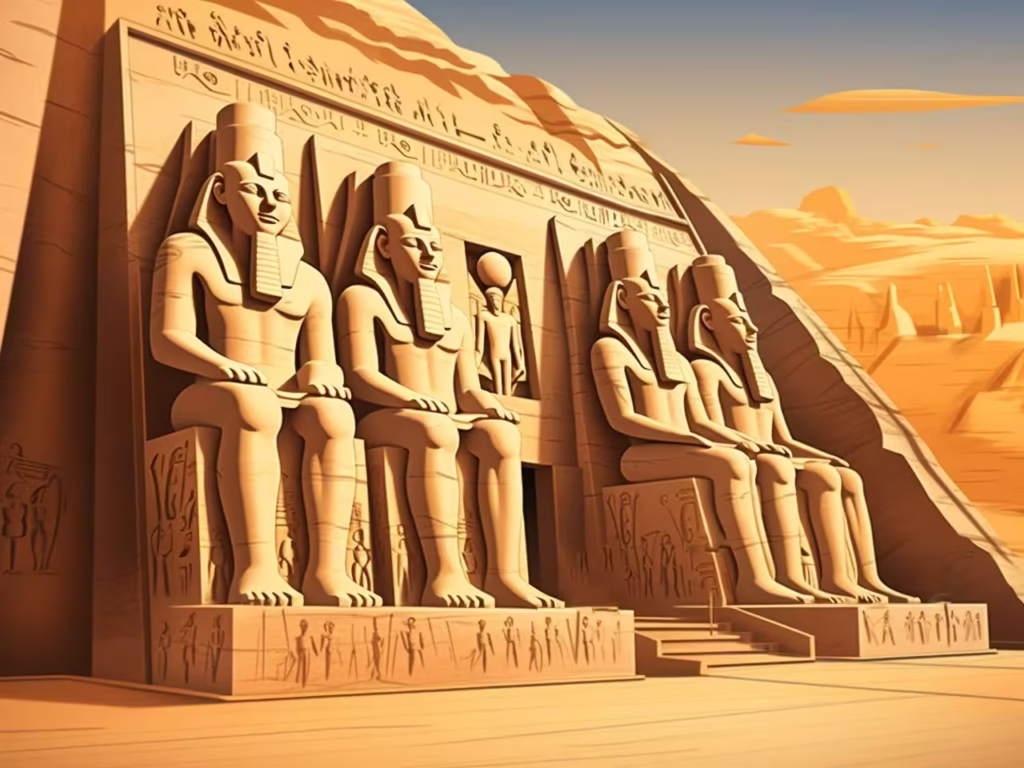
However, Egypt stands out. Its long history, visible in places like Luxor and the Valley of the Kings, adds a deeper layer to its identity. Walking through temple corridors or standing beside ancient carvings, you feel connected to a civilization that developed right here in North Africa thousands of years ago.
Even today, Egypt’s North African identity influences its culture, travel routes, and experiences. From Cairo’s busy streets to the calm flow of the Nile, everything reflects its place within this important part of the continent.
Is Egypt classed as North Africa? – What Part Of Africa Is Egypt In Explained
Egypt is officially classified as part of North Africa, and this is not just a modern label—it reflects geography, climate, and history. Stretching along the Mediterranean coast and extending deep into desert landscapes, Egypt shares key features with neighboring North African countries.
Understanding this helps answer What Part Of Africa Is Egypt In in a more practical way. It is not only located in the north of the continent, but it also developed within the same environmental and cultural zone that shaped early civilizations across this region.
When you explore Cairo, you’ll notice how this identity comes to life. From the busy streets to panoramic views over the Nile, the setting feels distinctly North African. One of the best ways to see this contrast is from above during a visit like the Tour Cairo Tower, where the city stretches between riverbanks and desert edges.
This classification also explains Egypt’s travel experience. You move from urban centers to ancient temples and open deserts in a short time, something typical of North Africa but especially powerful here due to Egypt’s long and visible history.
Is Egypt Part of Africa or the Middle East?
Egypt is geographically part of Africa, but culturally and politically, it is often linked to the Middle East as well. This dual identity is what makes the country so unique. When asking What Part Of Africa Is Egypt In, the answer remains clear—it is in North Africa—but its connections go far beyond that.
Some travelers even wonder, Is Egypt a third world country? This question usually comes from confusion about its global position. In reality, Egypt is a developing country with a strong historical legacy and a major role in both African and Middle Eastern regions. Its economy, culture, and influence reflect a mix of both worlds.
Walking through Cairo, you can feel this blend instantly. You hear Arabic spoken everywhere, see architecture influenced by Islamic history, yet stand on land that has always belonged to Africa. This combination is not a contradiction—it’s part of Egypt’s identity.
Because of this, Egypt acts as a bridge between continents, connecting ideas, trade, and travelers. It’s one of the few places where Africa and the Middle East meet so naturally, shaping a travel experience unlike anywhere else.
Egypt Between Africa and the Middle East
Egypt sits in a truly unique position, acting as a natural bridge between two major regions—Africa and the Middle East. This is not just a geographic detail on a map; it’s something you can feel as you travel through the country. From the Nile Valley to the Sinai Peninsula, Egypt connects continents in a way few places do.
In Cairo, this blend becomes especially clear. The culture, language, and daily life reflect strong Middle Eastern influences, while the land itself remains deeply rooted in Africa. Many travelers are surprised by how seamlessly these identities come together.
One of the most memorable ways to experience this contrast is during activities like the Camel Ride In Giza Pyramids Tour. As you move across the desert near the pyramids, you are standing on African soil, yet surrounded by traditions and stories that connect far beyond the continent.
This in-between position is what makes Egypt so fascinating. It’s not just where it is on the map, but how it connects worlds—historically, culturally, and geographically—all in one journey.
Why Is Egypt Considered a Transcontinental Country?
Egypt is considered a transcontinental country because it physically spans two continents—Africa and Asia. While most of its land lies in Africa, a smaller portion, the Sinai Peninsula, is located in Asia. This unique position is exactly what defines Egypt’s identity and answers What Part Of Africa Is Egypt In from a broader perspective.
One interesting question travelers often ask is, Do Egyptians have African DNA? The answer is complex. Egypt’s long history as a crossroads between continents means its population reflects a mix of influences from Africa, the Middle East, and beyond. Historians believe this diversity developed over thousands of years through trade, migration, and cultural exchange.
This transcontinental nature is not just a fact on paper—it shapes the experience of visiting Egypt. You can explore African landscapes along the Nile, then travel toward Sinai and feel the shift toward Asia.
Because of this, Egypt has always played a major role in connecting civilizations. Its location allowed ancient cultures to interact, and even today, it remains a gateway between continents, making every journey through the country feel like crossing worlds.
The Sinai Peninsula: Egypt’s Asian Side
The Sinai Peninsula is the part of Egypt that lies in Asia, making the country truly unique in its geography. Separated from mainland Africa by the Suez Canal, this region feels different in both landscape and atmosphere. Rocky mountains, open desert, and coastal views along the Red Sea create a setting unlike the Nile Valley.
Many travelers don’t realize that when they visit Sinai, they are technically stepping into Asia while still being in Egypt. This contrast adds another layer to the journey, especially for those exploring beyond the classic routes of Cairo and Luxor.
Back on the African side, the experience shifts again. Near Giza, for example, the desert opens wide around the pyramids, and activities like the Cairo Horse Riding Pyramids Day Tour let you explore these iconic landscapes in a more immersive way.
This division between Africa and Asia is what makes Egypt stand out. In one trip, you can move between continents, experience different terrains, and see how geography has shaped the country’s history for thousands of years.
Is Egypt in Africa? Understanding its locations and Geography
Egypt is indeed in Africa, but its geography is more complex than many travelers expect. To fully understand What Part Of Africa Is Egypt In, you need to see how the country stretches across regions while remaining firmly rooted in the northeastern part of the continent.
At the same time, people often ask, is Egypt in the Middle east—and the answer is partly yes. While Egypt is geographically African, its Sinai Peninsula lies in Asia, and its culture has strong ties to the Middle East. This combination creates a unique identity that you can feel as soon as you arrive.
Walking through Cairo, you experience this blend firsthand. The Nile flows through an African landscape, yet the architecture, language, and daily life reflect influences from across the Middle East. It may seem like a simple location question, but it actually explains a lot about Egypt’s character.
Because of this geography, Egypt has always been a meeting point. Ancient trade routes passed through here, and today, travelers still move between continents, cultures, and histories—all within one country.
The regional importance of Egypt in Africa
Egypt plays a major role in Africa, not only because of its location but also due to its long history and cultural influence. Positioned in the northeast of the continent, it has always acted as a gateway between Africa and other regions, shaping trade, politics, and travel routes for thousands of years.
The Nile River is a big part of this importance. Flowing through Egypt from the south, it connects the country to deeper parts of Africa, making it one of the most historically significant waterways on the continent. Many ancient civilizations grew along its banks, and even today, it remains central to life in Egypt.
For travelers, this regional role becomes clear when exploring places like Giza. Experiences such as the Quad Bike Pyramids Tour allow you to move across desert landscapes that have connected communities and cultures for centuries.
Egypt’s importance is not just historical—it continues today. From its capital Cairo to its ancient sites, the country remains a key destination in Africa, linking past civilizations with modern travel experiences in a way few places can offer.
Common Misconceptions About Egypt’s Location
Many travelers misunderstand Egypt’s geography, often thinking it belongs entirely to the Middle East or even confusing its continental identity. The truth is much clearer once you understand What Part Of Africa Is Egypt In—it is firmly located in North Africa, despite its strong cultural and historical ties to other regions.
One common misconception is that Egypt is not African at all. This idea usually comes from its language, traditions, and connections to the Arab world. However, geographically, Egypt is undeniably part of Africa, with most of its landmass stretching across the continent.
Another misunderstanding is that Egypt sits equally between continents. While it is true that the Sinai Peninsula lies in Asia, the vast majority of the country—including Cairo, Luxor, and Aswan—is in Africa.
Even today, visitors are sometimes surprised when they arrive and see the African landscapes, from the wide deserts to the fertile Nile Valley. This is why understanding Egypt’s true location adds depth to your journey—it helps you see the country not just as a destination, but as a place where geography and history meet in a very real way.