Discover Ancient Egyptian Hieroglyphics and Their Meanings and uncover the hidden language carved on the walls of ancient Egypt. These symbols were used in temples, royal tombs, and sacred monuments to record history, religion, and powerful beliefs. Travelers visiting Cairo, Luxor, and Aswan can still see these writings preserved for thousands of years. This guide explains how hieroglyphics worked, why they were important, and where you can explore them during your trip to Egypt.
What Did Ancient Egyptian Symbols Mean?
Ancient Egyptian Hieroglyphics and Their Meanings represented a complex writing system used to record ideas, sounds, names, and religious beliefs. These symbols were not just pictures carved on temple walls, but a full language that helped ancient Egyptians document history, prayers, royal achievements, and stories about the gods. Each sign could stand for a letter, a word, or even a complete idea depending on how it was used.
Many travelers think hieroglyphs were only decoration, but historians believe they were created to preserve knowledge forever. Because temples and tombs were built to last for eternity, the writing carved on them was meant to be read for thousands of years. This is why the carvings still look clear today in places like Luxor, Aswan, and the pyramids area.
When studying Ancient Egyptian Hieroglyphics and Their Meanings, experts also compare them with other ancient Egyptian symbols used in religion and daily life. Some symbols represented protection, others showed power, and many were connected to gods such as Ra, Osiris, and Anubis. Understanding these signs helps visitors see that every wall carving in Egypt tells a story, not just through art, but through a language that shaped one of the oldest civilizations in history.”
When did hieroglyphs first start being used?
Hieroglyphs first started being used around 3200 BC, during the early dynastic period of ancient Egypt, when the first kings began to organize the country into a unified kingdom. At that time, writing became necessary to record royal orders, religious texts, taxes, and important events. The earliest carvings were simple signs, but over time they developed into the detailed writing system seen on temple walls and inside royal tombs.
Historians believe that the first hieroglyphic inscriptions appeared on pottery, stone labels, and small monuments before they were later used on large temples and pyramids. As Egyptian civilization grew stronger, writing became more complex, especially during the Old Kingdom and Middle Kingdom periods.
Today, visitors can still see very early inscriptions in museums and archaeological sites around Cairo. Many travelers who join a Khan El-Khalili Tour also visit the Egyptian Museum, where some of the oldest examples of hieroglyphic writing are displayed. Seeing these early symbols helps explain how the Egyptian writing system slowly developed into the beautiful carvings that later covered temples in Luxor, Saqqara, and the Valley of the Kings.”
Why couldn’t everyone in ancient Egypt read and write?
In ancient Egypt, reading and writing were special skills that only a small group of people learned. Understanding Ancient Egyptian Hieroglyphics and Their Meanings required years of training, so most farmers, workers, and soldiers never had the chance to study the writing system. Instead, only scribes, priests, and royal officials were taught how to read the complex symbols used in temples, tombs, and official documents.
The writing system was difficult because it included hundreds of signs, and each one could have more than one meaning. This made Ancient Egyptian symbols translation a challenging task even for trained scribes. They had to know when a symbol represented a sound, a word, or a religious idea. Because of this complexity, learning to write hieroglyphs was considered a respected profession, and scribes held an important position in society.
Many inscriptions found in Luxor, Saqqara, and the pyramids show how writing was connected to religion and royal power. Ordinary people could see the carvings on temple walls, but only educated priests and scribes could truly understand what the texts meant. This is why hieroglyphic writing remained a symbol of knowledge, authority, and sacred tradition for thousands of years.”
List of Famous Ancient Egyptian Symbols With Meanings
Many travelers who study Ancient Egyptian Hieroglyphics and Their Meanings quickly notice that certain symbols appear again and again on temple walls, statues, and royal tombs. These signs were not random decorations. Each one had a specific meaning connected to religion, power, protection, or the afterlife, and many of them became some of the most recognizable images from ancient Egypt.
One of the most famous symbols is the Ankh, often called the key of life. It represented eternal life and was frequently shown in the hands of gods and pharaohs. Another well-known sign is the Eye of Horus, a symbol of protection and healing that appears in many temple carvings and funerary texts. The Scarab beetle was also very important, representing rebirth and the rising sun, which is why it is often found in tomb decorations.
Visitors can also see the Djed pillar, a sign of stability, and the Was scepter, a symbol of power and authority. These symbols are carved in many places across Egypt, especially in Luxor temples and inside royal tombs in the Valley of the Kings. Learning these signs helps make Ancient Egyptian Hieroglyphics and Their Meanings easier to understand, because each symbol adds another piece to the story written on the stone walls.”
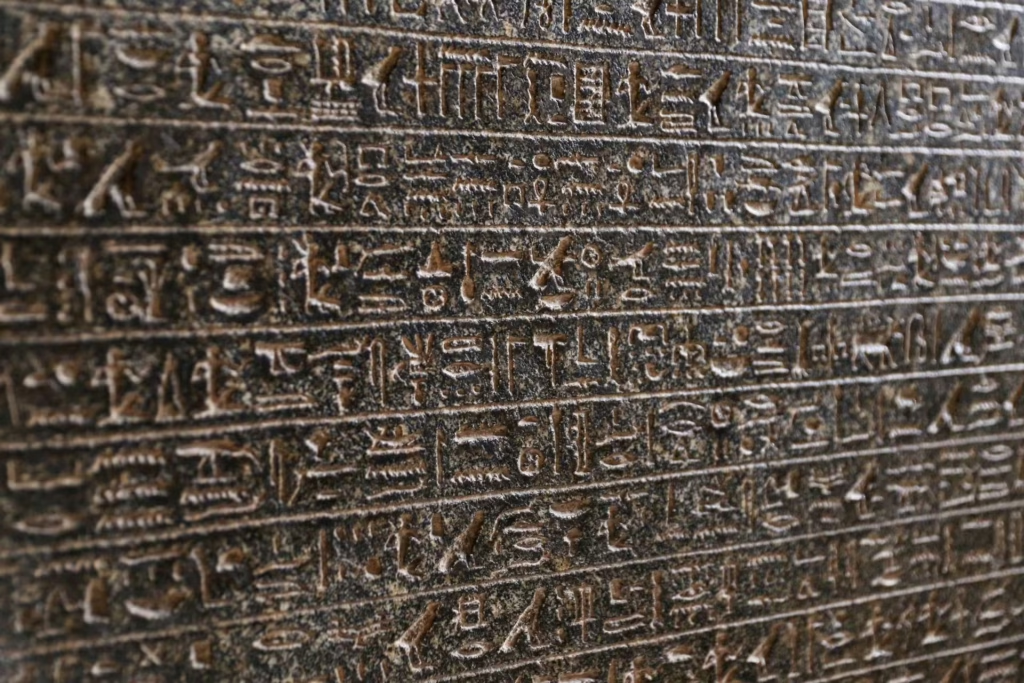
Ancient Egyptian Hieroglyphics and their meanings in Temples and Tombs
Temples and royal tombs are the places where the meaning of hieroglyphic writing becomes clear, because the walls were designed to preserve religious texts, royal stories, and sacred rituals for eternity. The carvings found in these sites show how priests carefully used symbols to communicate with the gods and to protect the king in the afterlife. Every scene was planned, and even the smallest sign could change the meaning of the whole inscription.
In large temples such as Karnak, Luxor, and Edfu, hieroglyphs describe offerings, festivals, and victories of the pharaoh. Inside tombs, the writing often comes from funerary texts that were believed to help the soul travel safely to the next world. Because these inscriptions were connected to religion, they were written with great precision, and many of them are still perfectly visible today.
Travelers who explore historic areas in Cairo during an Islamic and Coptic Cairo tour often learn how writing in Egypt changed over thousands of years, from hieroglyphs to later scripts used in churches and mosques. Seeing these different styles together helps visitors understand how the ancient writing system started in temples and tombs, then slowly evolved as Egyptian civilization continued to grow.”
How was the Rosetta stone decoded?
The Rosetta Stone played the most important role in understanding Ancient Egyptian Hieroglyphics and Their Meanings, because it gave scholars the key needed to read the ancient writing after it had been lost for centuries. Before its discovery, no one could understand the symbols carved on temples and tombs, and many people believed the signs were only religious drawings with no real language behind them.
The stone was found in 1799 by French soldiers in the town of Rosetta (Rashid) in Egypt. What made it special was that the same text was written in three scripts: Greek, Demotic, and hieroglyphs. Since scholars already understood Greek, they used it to compare the texts and slowly work out the meanings of the ancient signs. This discovery helped experts identify many famous ancient Egyptian symbols and understand how they were used in royal and religious inscriptions.
The breakthrough came when the French scholar Jean-François Champollion realized that some hieroglyphs represented sounds, not only pictures. After that, historians were finally able to read temple walls, tomb texts, and monuments across Egypt. Because of the Rosetta Stone, the world can now understand the stories written thousands of years ago by the ancient Egyptians.”
How do you translate hieroglyphics?
Translating hieroglyphics is not as simple as matching one symbol to one letter. The ancient Egyptian writing system used a combination of pictures, sounds, and meanings, which makes reading inscriptions a complex process. Some signs represent full words, others represent single sounds, and many symbols only make sense when they appear together in the same text. Because of this, understanding inscriptions requires training in grammar, history, and religious vocabulary.
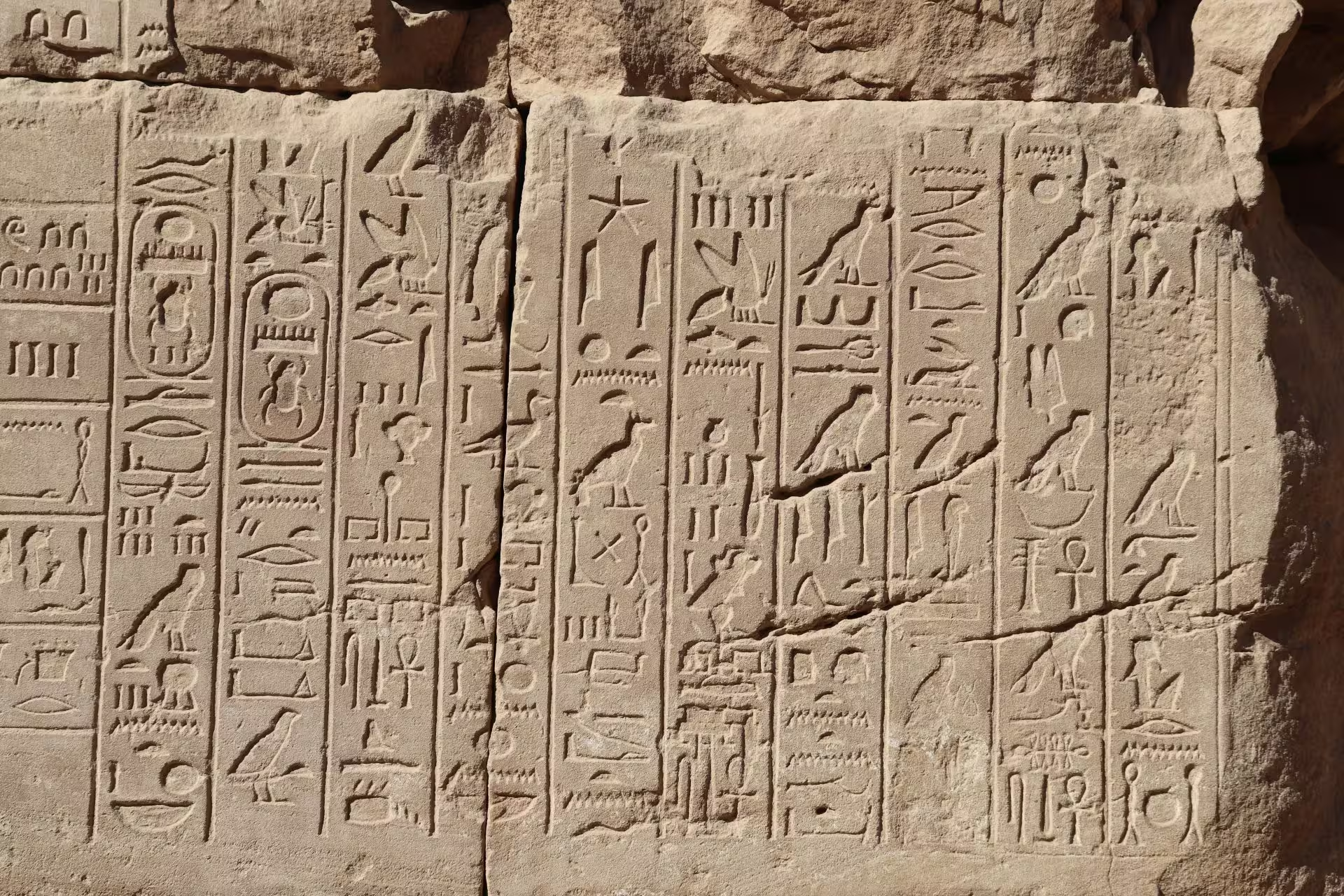
Experts usually begin by identifying the direction of the writing, since hieroglyphs can be read from left to right or right to left depending on the way the figures face. After that, they look for royal names written inside cartouches, which often help them understand the rest of the text. Over time, scholars compare similar inscriptions found in different temples and tombs to confirm the correct meaning.
Visitors who explore ancient sites during a Memphis and Saqqara tour often see some of the oldest carvings in Egypt, where guides explain how specialists learned to read the symbols step by step. These early inscriptions show that translation is not only about language, but also about understanding the culture, religion, and beliefs of the people who created the writing thousands of years ago.”
How the Hieroglyphics Translator Works
A hieroglyphics translator works by comparing each sign with known examples recorded by historians, but the process is much more complex than a simple alphabet translation. To understand Ancient Egyptian Hieroglyphics and Their Meanings, specialists must first decide whether a symbol represents a sound, a full word, or an idea connected to religion or daily life. In many cases, the same sign can have different meanings depending on where it appears in the sentence.
Modern translators use dictionaries created by Egyptologists who studied thousands of inscriptions found in temples, tombs, and ancient papyrus texts. These references help scholars recognize patterns and understand how the language was structured. However, translation still requires experience, because hieroglyphic writing often includes symbolic meanings that cannot be understood by direct word-for-word conversion.
Many visitors are surprised to learn that even today, experts continue to discover new details about Ancient Egyptian Hieroglyphics and Their Meanings while studying carvings in Luxor, Saqqara, and Aswan. When you look at a temple wall, what seems like simple pictures is actually a carefully written message, and the translator’s job is to bring that message back to life after thousands of years.”
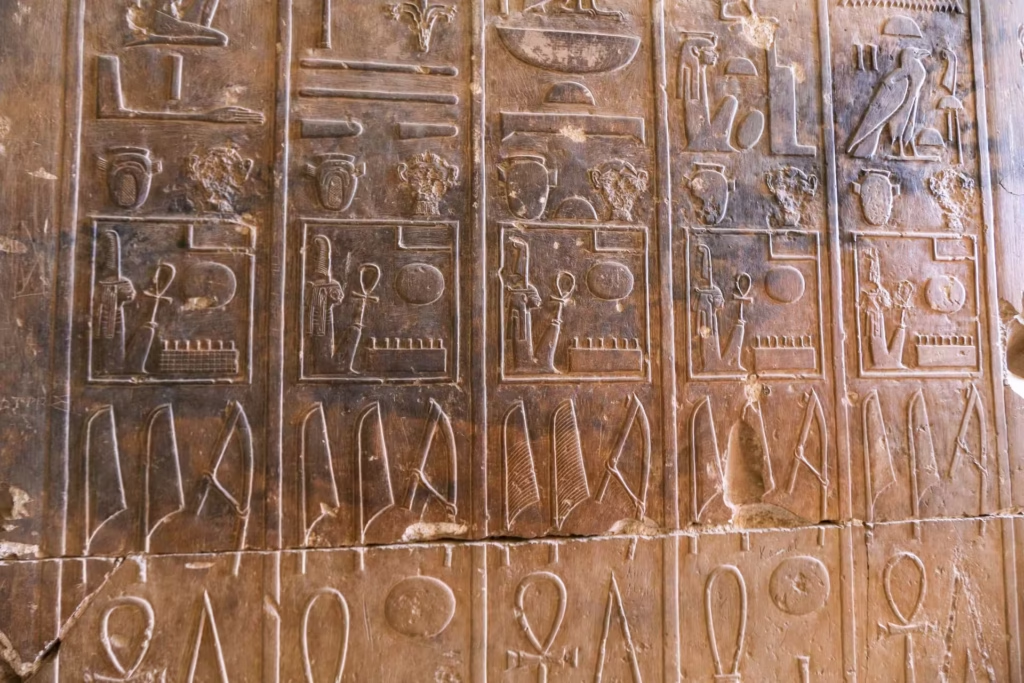
Ancient Egyptian hieroglyphics and their meanings you can see in Egypt today
Today, visitors can still see many examples of hieroglyphic writing across Egypt, especially in temples, tombs, and museums where the carvings remain clear after thousands of years. These inscriptions show real stories about kings, gods, and daily life, and they help explain how the ancient writing system was used in different periods of Egyptian history. Walking through these sites makes it easier to understand how symbols were placed carefully to create complete messages, not just decoration.
In Luxor, the walls of Karnak and Luxor Temple are covered with detailed inscriptions describing religious ceremonies and royal victories. In the Valley of the Kings, the tombs contain colorful texts from sacred books that were meant to guide the soul in the afterlife. Even in Cairo, museums display statues and stone tablets with beautifully carved writing that still looks sharp today.
Many travelers who want to see more historical sites also choose a Day tour from Cairo to Alexandria, where museums and ancient ruins show how writing continued to develop in later periods of Egyptian history. Seeing these places together helps visitors understand that hieroglyphs were only the beginning of a long tradition of writing that lasted for thousands of years in Egypt.”
Exploring Ancient Writing in Memphis and Saqqara
Memphis and Saqqara are among the most important places to understand Ancient Egyptian Hieroglyphics and Their Meanings, because some of the oldest inscriptions in Egypt were found in this area. These sites date back to the earliest dynasties, when the writing system was still developing, so the carvings here help historians see how symbols changed over time and how the language became more complex.
In Saqqara, visitors can see inscriptions inside ancient tombs where the walls are covered with texts describing offerings, prayers, and the journey to the afterlife. The famous Pyramid Texts, which are some of the oldest religious writings in the world, were discovered here. These carvings also show the Egyptian symbols name used for gods, kings, and sacred objects, making the site very important for understanding how the language worked in real life.
Exploring these ruins during a memphis and saqqara tour gives travelers the chance to see early hieroglyphs exactly where they were first used. Standing inside these tombs, you can notice how the symbols are larger, simpler, and sometimes different from the ones seen later in Luxor temples, showing how the writing system slowly evolved through the centuries.”
Discovering Hieroglyphics in the Valley of the Kings
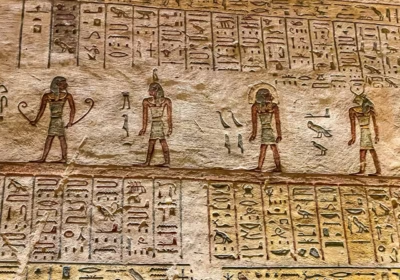
The Valley of the Kings is one of the best places in Egypt to see hieroglyphic writing exactly as the ancient Egyptians intended it to be seen. Inside the royal tombs, the walls are completely covered with colorful inscriptions that describe the journey of the king to the afterlife. These texts were not only decoration, but sacred writings meant to protect the pharaoh and guide his soul through the world of the gods.
Many of the carvings come from religious books such as the Book of the Dead and the Book of Gates, which were written using carefully chosen symbols. The scenes show gods, stars, and magical signs placed in a specific order, because the ancient Egyptians believed that writing had real power. When visitors enter these tombs, they often notice that the colors and symbols still look fresh even after thousands of years.
Travelers who explore the area during a Valley of the Kings tour can see these inscriptions up close, while guides explain the meaning of the scenes and why the texts were written in certain rooms of the tomb. Standing inside these chambers makes it easier to understand how important writing was in ancient Egypt, especially when it was connected to religion and the belief in eternal life.”
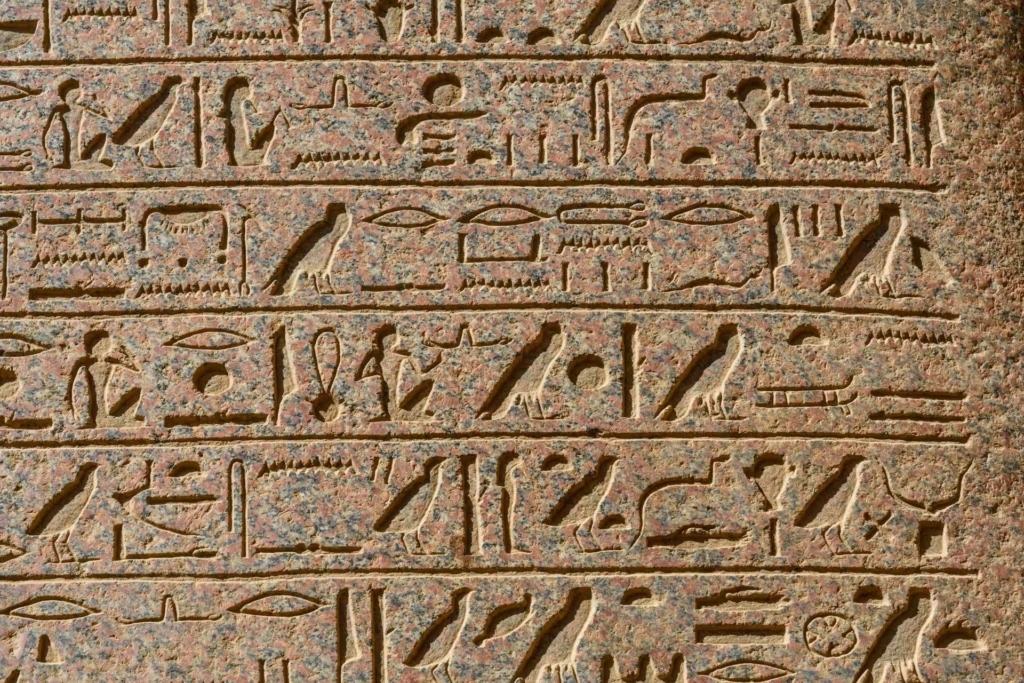
Temples Where Ancient Egyptian Symbols Still Exist
Many of the best examples of Ancient Egyptian Hieroglyphics and Their Meanings can still be seen today on the walls of temples that have survived for thousands of years. These temples were not only places of worship, but also centers of learning, where priests recorded religious texts, historical events, and royal achievements using detailed carvings. Because the Egyptians believed that writing had sacred power, the symbols were carved deeply into stone so they would last forever.
In Luxor, temples such as Karnak and Luxor Temple contain long rows of inscriptions showing kings making offerings to the gods. In Aswan, the temple of Philae has beautifully preserved hieroglyphs that describe myths about Isis and Osiris. Even smaller temples across Egypt include walls filled with signs that tell stories about festivals, wars, and ceremonies. Each carving adds another piece to the story of Ancient Egyptian Hieroglyphics and Their Meanings, helping historians understand how the language was used in different periods.
Visitors walking through these temples often notice that the symbols are arranged in straight lines and perfect shapes, showing how carefully the writing was planned. Seeing these inscriptions in their original place makes it easier to understand why hieroglyphs were considered both a language and a sacred art.”
Islamic and Coptic Cairo and the Evolution of Egyptian Writing
The history of writing in Egypt did not stop with hieroglyphs. Over thousands of years, the language changed as new religions and cultures appeared, especially during the Greek, Roman, Coptic, and Islamic periods. While Ancient Egyptian writing was carved on temple walls, later Egyptians began using different scripts for books, religious texts, and official records. This long development shows how the Egyptian language continued to evolve long after the time of the pharaohs.
In Coptic Cairo, visitors can see some of the later forms of Egyptian writing used by early Christians, which were based on the Greek alphabet but still connected to the ancient language. In Islamic Cairo, Arabic became the main script, and beautiful calligraphy replaced the old hieroglyphic carvings on walls and monuments. Even though the writing changed, the tradition of recording religion, history, and daily life continued in every period.
Travelers who explore the historic districts during a Philae Temple tour often learn how Egyptian writing moved from temple hieroglyphs to later scripts used in churches and mosques. Seeing these different styles together helps explain how Egypt kept its long tradition of writing, even as the language itself slowly transformed over the centuries.”
What is the most famous Egyptian symbol today?
When people talk about Ancient Egyptian Hieroglyphics and Their Meanings, one of the first images that comes to mind is the Ankh. This symbol, shaped like a cross with a loop at the top, is often called the key of life and represents eternal life and divine power. It appears in countless temple carvings where gods are shown holding the Ankh near the nose of the pharaoh, symbolizing the gift of life.
Another very famous symbol is the Eye of Horus, which was believed to offer protection, healing, and strength. This sign can be seen on tomb walls, amulets, and statues across Egypt. The Scarab beetle is also one of the most recognized symbols, connected to rebirth and the rising sun, because the ancient Egyptians believed the scarab pushed the sun across the sky just like the beetle rolls a ball of sand.
These well-known signs are important when studying Ancient Egyptian Hieroglyphics and Their Meanings because they appear in many different places, from Pyramids to temples in Luxor and Aswan. Even today, these symbols are used in jewelry, art, and souvenirs, showing how the most famous Egyptian signs are still recognized thousands of years after they were first carved in stone.”
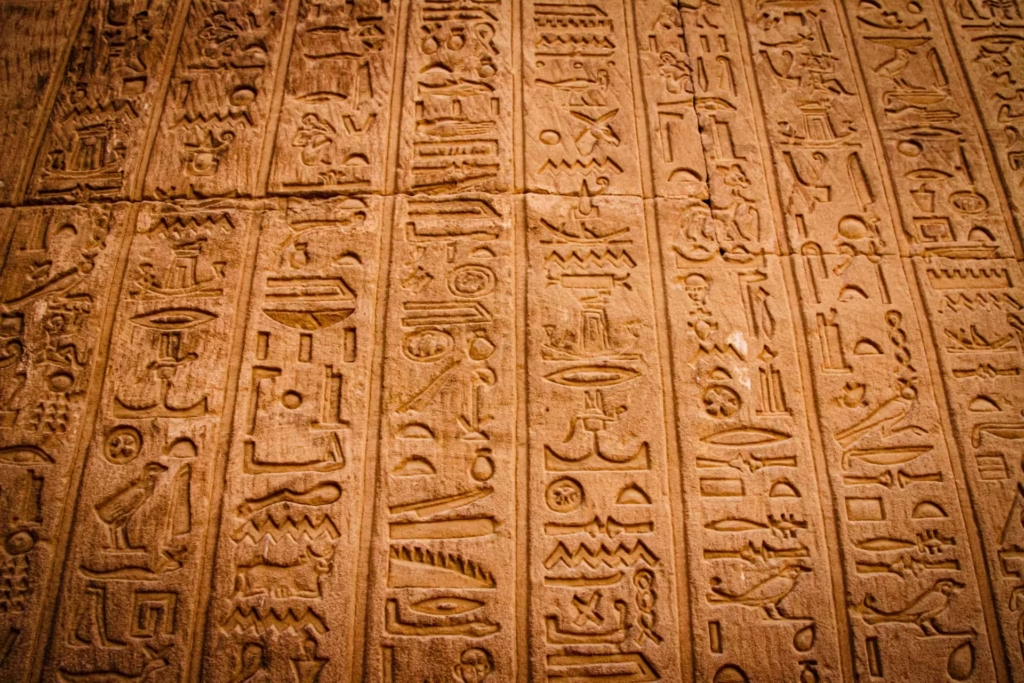
Is the ancient Egyptian language still spoken today?
The ancient Egyptian language is no longer spoken in daily life, but many Ancient Egyptian symbols are still known today through temple carvings, museum collections, and historical studies. The language written in hieroglyphs slowly disappeared after the Roman period, when Greek and later Coptic became the main scripts used in Egypt. Over time, Arabic replaced these languages, and it became the spoken language of the country that continues until today.
Although people no longer speak the language of the pharaohs, scholars can still read it because the writing system was carefully studied and translated after the discovery of the Rosetta Stone. This allowed historians to understand temple inscriptions, royal tomb texts, and religious writings that had been unreadable for centuries. Because of this work, many Ancient Egyptian symbols can still be identified and explained, even though the language itself is no longer used in conversation.
Today, the closest connection to the ancient language can be seen in Coptic, which was used in early Christian Egypt and still survives in church prayers. This long history shows that while the spoken language changed many times, the symbols and writings of ancient Egypt never completely disappeared.”
Egyptian Symbols Conclusion
Ancient Egyptian Hieroglyphics and Their Meanings show how advanced the civilization of ancient Egypt really was. What may look like simple pictures on temple walls is actually a complete writing system used to record history, religion, science, and daily life. These symbols helped preserve the stories of kings, gods, and ordinary people, allowing modern visitors to understand a culture that existed thousands of years ago.
From the earliest carvings in Saqqara to the detailed tomb paintings in the Valley of the Kings, hieroglyphs were always connected to belief and tradition. The Egyptians believed that writing had power, and this is why the symbols were carved deeply into stone and placed carefully in temples and tombs. Because of this, many inscriptions are still clear today, even after thousands of years.
Learning about Ancient Egyptian Hieroglyphics and Their Meanings makes visiting Egypt very different, because every wall, statue, and monument starts to feel like a page from an ancient book. When travelers explore Luxor, Cairo, or Aswan, they are not only seeing ruins, but reading messages left behind by one of the oldest civilizations in the world.